







New real estate development of 14 units in Pontchâteau (44160)
Description of this new development in Pontchâteau
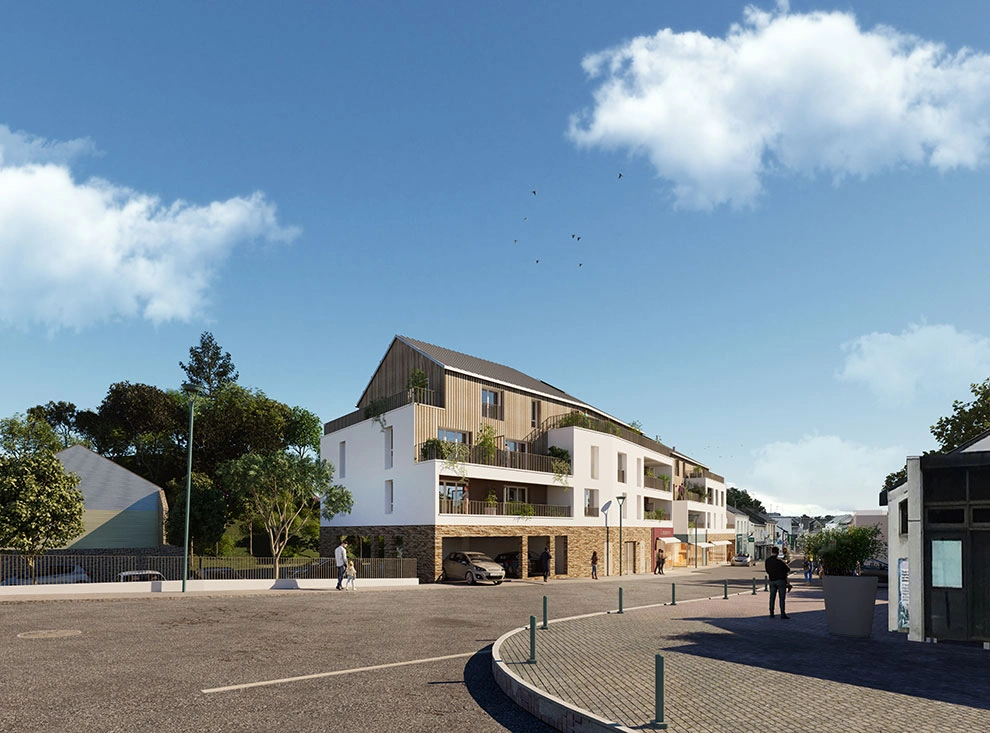
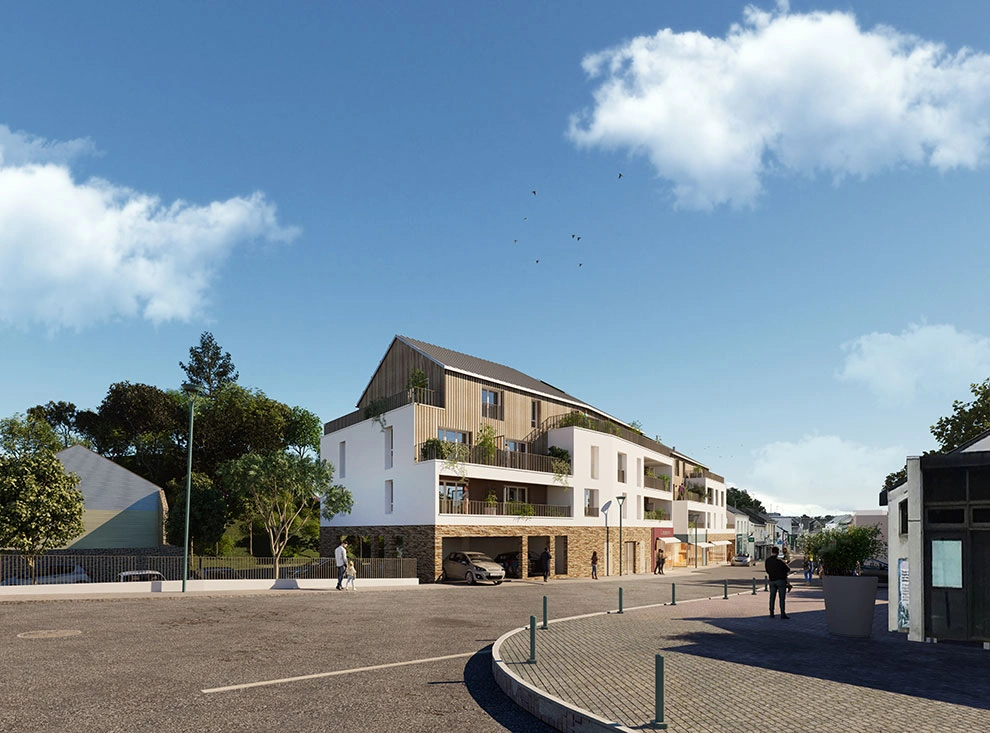
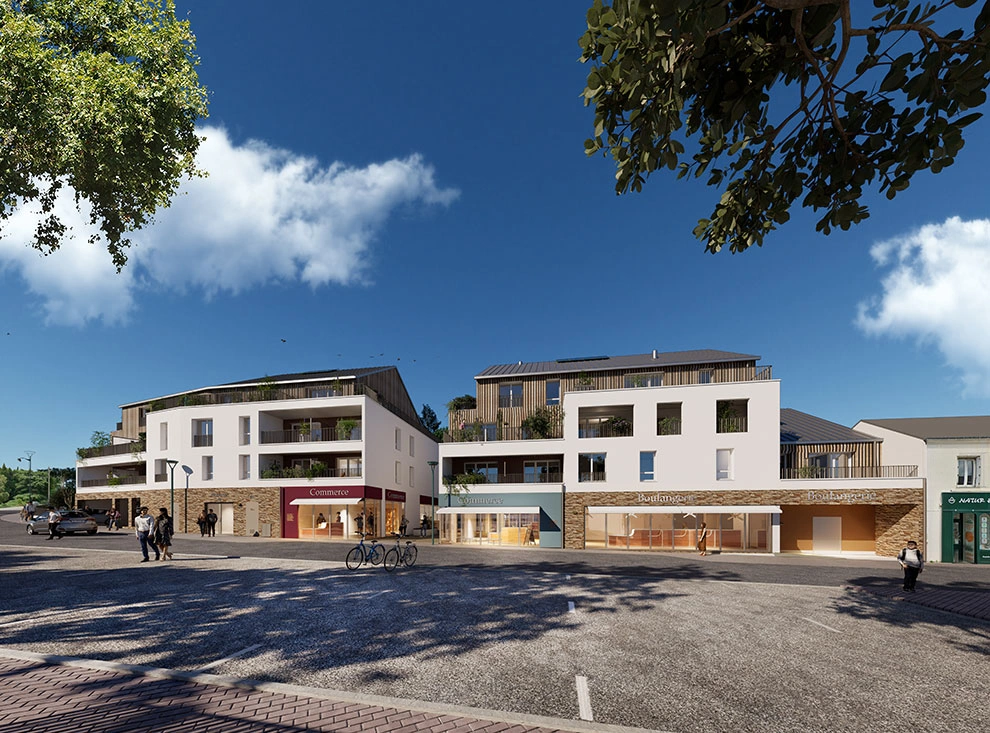
Située en plein centre-ville de Pontchâteau, la résidence Le Loriot propose un cadre de vie pratique et intimement lié au dynamisme local.
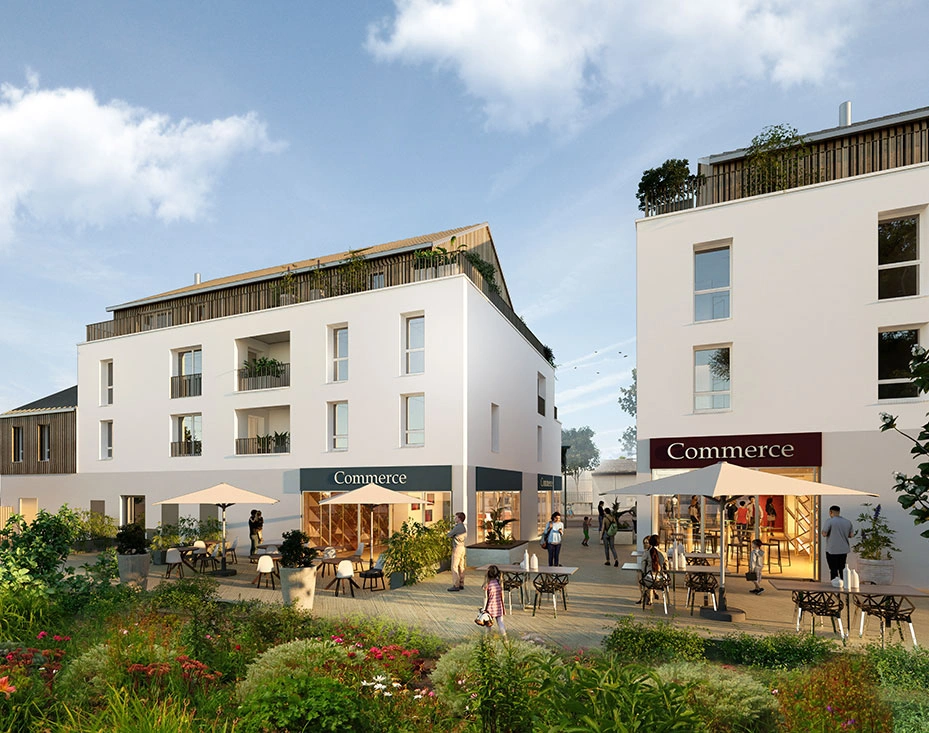
Composée de 25 appartements, du 2 au 4 pièces, répartis dans deux immeubles en miroir sur trois niveaux, elle s’intègre dans un quartier vivant, avec commerces en pied d’immeuble et un accès direct aux services essentiels.
Chaque logement dispose d’un espace extérieur généreux (loggia, balcon ou terrasse), prolongeant les pièces de vie vers un environnement paysager soigné. L’architecture mêle matériaux nobles, teintes naturelles, parements pierre, bardages bois et larges ouvertures.
Prestations
Appartements
- Espaces de vie fonctionnels et lumineux, largement ouverts vers l’extérieur
- Organisation intérieure fluide avec séjour convivial et cuisine ouverte
- Isolation performante répondant à la réglementation RE2020
- Chaleur douce et consommation optimisée grâce à une meilleure perméabilité à l’air
- Double vitrage pour l’ensemble des ouvertures
- Accès sécurisés, halls soignés avec boîtes aux lettres intégrées, ascenseur et visiophone
Espaces extérieurs / Résidence
- Paysagisme qualitatif : massifs végétalisés, arbres, cheminements apaisés
- Stationnements intégrés dans un cadre paysager
- Local vélos sécurisé et facilement accessible
- Matériaux extérieurs nobles : parements pierre, enduits colorés, bardage bois en faux claire‑voie, loggias aux teintes naturelles
Points forts
- Cadre de vie exceptionnel aux portes du Parc naturel régional de Brière, dans une commune dynamique et conviviale
- Résidence intimement intégrée au centre-ville : commerces, services, marché et équipements culturels accessibles directement à pied
- Espaces extérieurs généreux : loggias, balcons ou terrasses jusqu’à plus de 50 m²
- Architecture soignée : matériaux nobles, teintes naturelles, parements pierre, bardage bois
- Stationnements aériens au sein d’un environnement paysager calme et qualitatif
- Local vélos sécurisé, idéal pour les déplacements doux
- Appartements lumineux, agencements optimisés et performances énergétiques conformes RE2020
Situation
À proximité de la résidence (à pied)
- Supermarché : 50 m
- Promenade du Brivet : 200 m
- Théâtre & médiathèque : 280 m
- Boulangerie : 350 m
- Ensemble scolaire Le Quéral : 400 m
- Gare SNCF et axes routiers : 500 m
- Parc du Coët-Roz : 1,4 km
Temps d'accès (en voiture)
- Nantes : 35 min
- Saint‑Nazaire : 35 min
- Vannes : 50 min
- Rennes : 1h30
Avis expert
Pontchâteau séduit par son équilibre entre nature préservée, vitalité locale et qualité de vie. Située à l’entrée du Parc naturel régional de Brière, la commune offre un environnement verdoyant, propice aux activités de plein air grâce à ses sentiers, ses pistes cyclables et les rives du Brivet.
Son centre-ville dynamique, doté de commerces, d’un marché animé, d’un pôle santé, d’une médiathèque et d’un tissu associatif culturel riche, contribue à son attractivité.
Accessible facilement par la route et le train, Pontchâteau attire autant les actifs que les familles à la recherche d’un cadre pratique au quotidien.
14 lots d'habitations disponibles
-
PriceSurface areaCharacteristics
-
Apartment 42m2Parking Floor : 2172 000€
-
172 000€42m2Parking - Floor : 2
-
Apartment 39m2Parking Floor : 3175 000€
-
175 000€39m2Parking - Floor : 3
-
Apartment 45m2Parking Floor : 2183 000€
-
183 000€45m2Parking - Floor : 2
-
Apartment 43m2Parking Floor : 3187 000€
-
187 000€43m2Parking - Floor : 3
-
Apartment 47m2Parking Floor : 1188 000€
-
188 000€47m2Parking - Floor : 1
-
Apartment 47m2Parking Floor : 2189 000€
-
189 000€47m2Parking - Floor : 2
-
Apartment 47m2Parking Floor : 3208 000€
-
208 000€47m2Parking - Floor : 3
-
Apartment 50m2Parking Floor : 3219 000€
-
219 000€50m2Parking - Floor : 3
-
PriceSurface areaCharacteristics
-
Apartment 58m2Parking Floor : 3265 000€
-
265 000€58m2Parking - Floor : 3
-
Apartment 65m2Parking Floor : 1280 000€
-
280 000€65m2Parking - Floor : 1
-
Apartment 66m2Parking Floor : 1285 000€
-
285 000€66m2Parking - Floor : 1
-
Apartment 65m2Parking Floor : 2289 000€
-
289 000€65m2Parking - Floor : 2
-
PriceSurface areaCharacteristics
-
Apartment 93m2Parking Floor : 3401 000€
-
401 000€93m2Parking - Floor : 3
-
Apartment 96m2Parking Floor : 3434 000€
-
434 000€96m2Parking - Floor : 3
Are you interested in this property? Contact us !







Legal guarantees: Financial completion guarantee, apparent defects guarantee, perfect completion guarantee, two-year guarantee, and ten-year guarantee.
Energy performance: RT2012 and RE2020
Accessibility to housing: disability standards, elevator, etc.
Standards: thermal, acoustic, etc.
A customizable home: modification works (bathtub, electrical outlet) and/or interior fittings such as tiling, painting, bathroom furniture, etc.
Reduced notary fees: approximately 3% vs. 7 to 8% for older properties
State aid: Zero-interest loan, Pinel scheme, etc.
Total or partial exemption from property tax: for the two years following the construction
Reduced VAT: Possibility of buying properties in ANRU zones and benefiting from a 5.5% VAT under certain income conditions.
First-time homebuyers can benefit from the zero-interest loan (PTZ) under certain income conditions.
First-time homebuyers refer to households that have not owned their primary residence in the two years preceding the loan offer and whose income does not exceed the established ceiling.
The assessment of income is based on the reference taxable income from the year N-2 of all the individuals intended to occupy the property.
The amounts of the PTZ and the income limits vary depending on the location of the property (Zone A, B, or C).
Searching for a property that meets your needs (get assistance from a specialized advisor from Capifrance)
Signing a reservation contract detailing the property (size, location, description), price, delivery date, etc. The buyer pays a deposit to the developer into an escrow account.
Financing the purchase with a loan and signing the loan offer
Signing the deed of sale at the notary's office, including all information about the property, the price and payment terms, the delivery date, and the guarantees.
Customizing the property and selecting materials in agreement with the developer (modification works).
Delivery of the property, allowing for the identification of any defects, which are addressed within a month following delivery by the companies involved in the construction.
RE2020 is the new energy and environmental regulation for all new construction. The developer commits to a certain level of building energy consumption and greenhouse gas emissions.
The aim is to design and build the future living spaces for the French population while pursuing three major objectives set by the government:
An objective of energy efficiency and energy decarbonization;
A reduction in the carbon footprint;
Ensuring comfort in case of extreme heat.
This guarantee applies for 10 years from the date of completion of the work. It protects against potential damages that could compromise the solidity of the construction and make it uninhabitable. Cracks, leaks, roofing problems, etc.: the builder is required to intervene if these damages are not due to normal wear and tear or poor maintenance of the dwelling.
Do you need advice for your real estate project? Contact a Capifrance advisor
