






Becoming a homeowner in France remains one of the most defining life projects for a household, and it requires methodical preparation well before the first viewing. In 2026, with mortgage rates at around 3.5% over 20 years, an expanded zero-interest loan (prêt à taux zéro, or PTZ) and banks that remain demanding when it comes to personal contributions, every step counts in securing your financing. This guide sets out, in chronological order, everything a first-time buyer needs to anticipate: budget, down payment, available assistance, searching for a property, the purchase offer, the preliminary sales agreement (compromis de vente) and signing the final deed. Each year, the advisors of the Capifrance network support hundreds of future homeowners through this journey, from the valuation of the property to the handover of the keys.
In summary
- Before starting any search, assess your borrowing capacity and build up a personal contribution ideally between 10% and 20% of the property price.
- The 2026 zero-interest loan (PTZ) has been extended and its ceilings raised: it can finance up to 50% of a new-build home for households on modest incomes.
- Mortgage rates are around 3.4% to 3.6% over 20 years in September 2026, with an upward trend: comparing bank offers remains essential.
- Each step - bank application, purchase offer, preliminary sales agreement, authentic deed - has its own legal deadlines, which you need to factor into your purchase schedule.
Setting your budget and borrowing capacity
The very first step to becoming a homeowner is to set a realistic budget, before even looking at a single listing. This calculation avoids disappointment and immediately targets the properties that are genuinely within reach.
Calculating your borrowing capacity
Banks apply a maximum debt-to-income ratio of 35% of net income, borrower insurance included, subject to exceptions regulated by the Haut Conseil de stabilité financière. Your borrowing capacity depends on your income, your existing financial commitments (current loans, maintenance payments) and the intended loan term. An online simulator gives an initial estimate, but a meeting with a broker or your bank will refine this amount by taking into account your remaining disposable income after expenses (reste à vivre).
Including additional costs
On top of the property price come notary fees (approximately 7% to 8% for existing properties, 2% to 3% for new builds), bank guarantee fees, application fees and, where applicable, agency fees. These additional costs often represent 8% to 10% of the total budget and must be anticipated from the outset so as not to unbalance the financing plan.
Building a solid personal contribution
The personal contribution remains a decisive criterion for obtaining financing on good terms and for reassuring lenders about the strength of your application.
What amount of personal contribution in 2026?
In 2026, banks recommend a minimum personal contribution of 10% of the property price, generally corresponding to the acquisition costs (notary, guarantee, application fees). To secure the best interest rates, aiming for a 15% to 20% contribution remains a relevant goal: each additional 5% increment can lower the offered rate by up to 0.10 points. However, there is no legal minimum, and some profiles (young professionals, civil servants) can sometimes negotiate 100% financing, or even more to cover additional costs.
Possible sources of contribution
The contribution can come from your personal savings (Livret A, PEL, life insurance), a family gift, an inheritance or the sale of an existing property. Releasing profit-sharing (participation) or a company savings plan is also a frequent source, as are the prêt d'accession sociale (social home-ownership loan) or the PTZ, which supplement the cash contribution to strengthen the overall financing plan.
Knowing the assistance available to become a homeowner
Several public schemes make it easier to buy a home, particularly for first-time buyers on modest or intermediate incomes.
The 2026 zero-interest loan (PTZ)
The PTZ (zero-interest loan) has been extended until 31 December 2027 and its ceilings have been raised for 2026: income ceilings increase by 8 to 13% depending on the zone, and the eligible operation amounts rise significantly (for example, up to €360,000 for a household of five or more people in Zone A). The PTZ can finance up to 50% of the cost of a new apartment in a multi-unit building for the most modest households, compared with a ceiling of 30% for a detached house. However, it covers neither notary fees nor ancillary costs, and remains reserved for people who have not owned their primary residence during the two years preceding the application.
Other complementary schemes
The prêt d'accession sociale (PAS, social home-ownership loan), the prêt Action Logement (formerly the "1% logement") for private-sector employees, and certain local subsidies paid by local authorities can also supplement the financing plan. Also check with your town hall or region, as some areas offer specific grants for the purchase of a first primary residence.
Putting together your loan application
A well-prepared file speeds up the granting of the loan and improves the terms negotiated with the bank or broker.
Documents to gather
Prepare your last three payslips, your last two tax assessment notices, your bank statements for the last three months, proof of address and, where applicable, the amortisation schedules of your existing loans. A complete and well-organised file from the first meeting reassures the bank and avoids back-and-forth exchanges that delay the review of your application.
Comparing loan offers
In September 2026, average mortgage rates are around 3.4% over 15 years, 3.5% over 20 years and 3.6% over 25 years, with an upward trend anticipated by several brokers by the end of the year. Having several banks compete, or going through a broker, often makes it possible to gain several tenths of a percentage point on the rate and to optimise the cost of borrower insurance, which can now be taken out outside the bank's group policy.
Searching for the ideal property
Once the budget and financing are settled, the search for a home can begin on solid and realistic foundations.
Defining your priority criteria
Location, floor area, number of rooms, proximity to transport and schools, general condition of the property: rank your criteria so as not to spread yourself too thin. A local real estate advisor knows the prices in each neighbourhood in detail and can save you valuable time by targeting only the properties that truly match your budget and needs.
Browsing listings and viewing properties efficiently
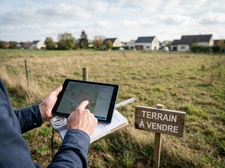
Use multiple sources to browse as many property listings as possible that match your criteria, and do not hesitate to request a property valuation to check that the asking price is consistent with the local market. During viewings, list the technical points to watch (energy performance diagnostic, work to be planned, co-ownership charges) that will weigh on the overall budget of the project.
Making an offer and signing the compromis
As soon as a property meets your expectations, you should quickly secure the transaction with a written offer followed by a compromis de vente (preliminary sales agreement).
Drafting and negotiating your purchase offer
The purchase offer, ideally made in writing, binds the buyer if the seller accepts it without modification. It may be subject to conditions precedent, notably obtaining financing, which protect the buyer in the event of a loan refusal. An experienced real estate advisor helps you formulate an offer consistent with the market while preserving your negotiating margin.
The compromis and the cooling-off period
The compromis de vente (or promesse synallagmatique, a bilateral preliminary agreement) sets the final terms of the transaction: price, deadlines, conditions precedent. The buyer then benefits from a statutory withdrawal period of ten days, during which they may back out without justification or penalty. It is also at this stage that the deposit, generally between 5% and 10% of the sale price, is paid.
Completing the purchase: from the acte authentique to the keys
The final step legally formalizes the transfer of ownership and brings the buyer's journey to a close.
Final release of the loan
Once the loan offer has been accepted and the legal ten-day reflection period has elapsed, the bank releases the funds in preparation for the final signing. This period, which cannot be shortened, must be factored into the overall purchase timeline, which is generally two to three months after the signing of the compromis.
Signing at the notary's office
The acte authentique de vente (authentic deed of sale) is signed at the notary's office, in the presence of the buyer and the seller (or their representatives). The notary checks the legal compliance of the file, handles the payment of the price and fees, then hands the keys to the property over to the new owner: this is the official culmination of the journey to becoming a homeowner.
Conclusion
Successfully achieving homeownership depends above all on rigorous preparation: defining your budget, building a solid down payment, tapping available assistance such as the PTZ, putting together a complete loan application, then proceeding methodically from the search for a property through to the signing of the acte authentique. In a context of slightly rising interest rates in 2026, planning ahead and working with real estate professionals make all the difference in securing financing on good terms and calmly bringing your project to fruition.
The expert's view
"Becoming a homeowner can't be improvised: it is a project that is built step by step, often over several months, and upfront preparation makes all the difference between a successful purchase and a journey fraught with pitfalls. Too many first-time buyers start by visiting properties before even knowing precisely how much they can borrow, which leads to needless disappointment and wastes precious time. Our advice is always the same: take the time to review your situation with a professional before starting viewings, in order to frame your budget, your down payment and the assistance available, such as the PTZ. Once this framework is in place, everything becomes smoother, from the search for a property through to the signing at the notary's office. Our Capifrance advisors, present throughout France, know local markets and the specific features of each area perfectly: they know at what price properties actually sell, which neighborhoods offer the best potential, and how to structure an application that reassures banks. This local, human and personalized support is often what turns a hesitant project into a successful purchase. My advice to future homeowners: never face these decisions alone, surround yourself with professionals from the very start of the project rather than at the time of signing."
— Frédéric Rémy, Director of Commercial Performance at Capifrance
FAQ - Frequently asked questions
How much of a down payment do you need to become a homeowner in 2026?
A minimum down payment of 10% of the property price is recommended, generally corresponding to notary fees and guarantee costs. To obtain the best interest rates, aiming for a 15 to 20% down payment remains advisable, although there is no mandatory legal minimum.
Who can benefit from the zero-interest loan (PTZ) in 2026?
The PTZ is intended for first-time buyers who have not owned their main residence during the previous two years, subject to income conditions. The ceilings were raised in 2026 and the scheme has been extended until December 31, 2027.
What are current mortgage interest rates?
In September 2026, average rates are around 3.4% over 15 years, 3.5% over 20 years and 3.6% over 25 years, with an upward trend expected by the end of the year according to several brokers.
How long does the purchase process take, from the compromis to the final deed?
Generally allow two to three months between the signing of the compromis de vente (preliminary sales agreement) and that of the acte authentique, the time needed to obtain the final loan offer and to observe the legal ten-day reflection period.
How can you find reliable support for your real estate project?
The best approach is to find a real estate advisor near you who knows the local market, can provide a reliable valuation and support every stage of the project, from the search for a property through to the final signing.
Also read on the blog
- What is the maximum debt-to-income ratio for a mortgage?
- Mortgage rates in September 2026: trends and forecasts
- Mortgage guarantee fees: how much do they cost?
Author
Frédéric Rémy – Director of Sales Performance

A real estate professional with several years of experience within the Capifrance network, I would like to share essential advice with you to help you successfully complete your property project with our advisors.