






Updated: August 2026
Are you wondering whether converting your attic into a livable space before putting your house on the market is a worthwhile investment? This is a common question among homeowners with an unused attic or roof space: should you invest in renovations to gain additional living space, or is it better to sell the property as it is?
There is no universal answer. It depends on the type of attic you have, the actual cost of the renovation, and, above all, the local real estate market at the time of the sale.
At first glance, converting an attic seems attractive: more living space, an extra room (bedroom, office, or master suite), and therefore, in theory, a higher selling price. In reality, however, the situation is more nuanced. Between renovation costs, project timelines, administrative requirements, and uncertainty about the actual increase in resale value, careful calculations are essential before getting started.
In some situations, it may be wiser to sell the property as it is and allow the buyer to complete the conversion according to their own preferences.
In this article, we explain the difference between convertible attics and finished attics, their impact on usable floor area under the Carrez Law, the average renovation costs depending on the scope of work, how profitability varies according to market conditions, when attic conversion is not a good idea before selling, the alternative of selling a property with untapped potential, and the key regulatory requirements to keep in mind. A practical example is also included to illustrate these concepts.
In summary
- A finished attic (properly insulated, with sufficient ceiling height and permanent access) counts as living space and is included in the property's official floor area, unlike an attic that is merely convertible.
- The cost of converting an attic varies considerably depending on the scope of work, ranging from a few thousand euros for insulation and basic finishing to a much larger investment for a complete conversion with roof windows, a permanent staircase, and utility connections.
- The increase in resale value depends primarily on the strength of the local real estate market. In high-demand areas, additional square footage is generally well rewarded, whereas in slower markets, the return on investment is often limited.
- Carrying out attic conversion work before selling is not always worthwhile, especially if the property needs to be sold quickly or if the local market does not sufficiently reward additional living space.
- An alternative is to sell the property as it stands while highlighting the attic's conversion potential in the listing, without carrying out the work yourself.
- Key regulatory considerations include obtaining the appropriate planning authorization (or building permit where required), updating the Energy Performance Certificate (EPC/DPE) after the work, and ensuring consistency between the advertised price and the property's actual habitable area.
Convertible or Finished Attics: What Difference Does It Make for Living Space?
What Defines a "Finished" Attic?
From both a legal and technical perspective, there is an important distinction between two types of attics.
A convertible attic is a roof space that has the potential to become living accommodation but has not yet been finished. It may lack insulation, finished flooring, and even permanent access, with only a hatch or folding ladder available.
A finished attic, by contrast, has been fully converted into a genuine living space. It features insulation, completed wall and floor finishes, natural light through roof windows or dormers, heating, and, most importantly, permanent access via a fixed staircase.
This distinction is about far more than comfort—it directly affects how the property's floor area is calculated and, consequently, its selling price per square metre.
Ceiling Height and the Carrez Law
For attic space to be included in the Carrez Law calculation (mandatory for condominiums) or in the property's official living area more generally, a ceiling height rule applies: only the portion of the room where the ceiling height reaches at least 1.80 metres (5 ft 11 in) is included in the calculation.
In practical terms, an attic room with sloping ceilings may have a large floor area, but only the sections with sufficient headroom count toward the official habitable surface.
This is a crucial consideration. Two houses with identical attic footprints can have significantly different official living areas depending on the roof pitch and the height at the roof ridge.
Before considering an attic conversion, it is therefore essential to have the available headroom assessed by a professional. If the space is too low, expensive renovation work will never generate a substantial increase in official living space.
An attic that is merely convertible, but has not yet been transformed, is generally not included in the property's advertised living area or in the Carrez surface calculation. However, it can still be presented as future development potential, which many buyers perceive as an added value.
How Much Does an Attic Conversion Cost?
The cost of converting an attic depends largely on its initial condition and the scale of the project. As a general guideline, several levels of work can be distinguished.
A basic conversion, including insulation, plasterboard installation, and flooring in an attic that is already accessible and has sufficient headroom, represents the most affordable option.
Adding roof windows or dormers to provide natural light and comply with habitability standards significantly increases the budget, especially if modifications to the roof structure are required.
Installing a permanent staircase to replace a hatch or folding ladder, connecting the space to electricity and heating, and reinforcing the floor structure (where necessary to support a habitable room) also add to the overall cost.
For the most complex projects, where the roof structure itself must be modified—such as raising the roof or creating dormer extensions to gain additional headroom—the project becomes comparable to a full home extension, with costs increasing accordingly.
In practice, a complete attic conversion, including roof windows and a permanent staircase, often costs several tens of thousands of euros for an area of only a few dozen square metres.
By contrast, simply insulating and finishing an already convertible attic is considerably less expensive.
These figures should only be regarded as general estimates. Actual costs vary depending on the region, the condition of the roof structure, and the contractors involved. Obtaining several quotations before committing to the work is highly recommended, particularly if the objective is to sell the property shortly afterward.
Attic Conversion Before Selling: What Is the Real Impact on the Sale Price?
The Principle: The Benefit Depends on Local Market Conditions
This is the key question.
A successful attic conversion can, in theory, increase the property's habitable floor area and therefore justify a higher asking price. However, this increase is neither automatic nor directly proportional to the cost of the renovation.
Its profitability depends largely on the strength of the local real estate market.
In areas where demand is high and housing supply is limited—such as major cities, sought-after neighbourhoods, coastal areas, or dynamic suburban markets—each additional square metre of living space generally commands a strong premium. Buyers are often willing to pay more for an extra bedroom or home office, particularly if the property changes from, for example, a three-room home to a four-room home, thereby appealing to a broader range of purchasers, including families and remote workers.
Conversely, in slower markets where buyers have more choice, the additional living space is not always reflected in the selling price. In these situations, the increase in value may be significantly lower than the actual renovation cost, making the project financially unattractive from a resale perspective.
How to Assess Whether a Finished Attic Will Be Profitable Before Starting the Work
Before undertaking an attic conversion with the intention of increasing your property's resale value, it is advisable to follow a structured approach:
- Obtain a free online property valuation to determine your home's current market value, then request a second valuation based on the assumption that the attic has been fully converted. Comparing the two estimates will give you an indication of the potential increase in value.
- Compare this expected increase with the estimated renovation costs by obtaining quotations from several contractors. Be sure to include a contingency allowance for unexpected expenses, which are common with this type of project.
- Review comparable properties that have recently sold in your area, both with and without converted attics. This provides a more objective assessment of local market premiums than relying on assumptions.
- Consider the project timeline. Attic conversions often require several weeks or even months to complete, delaying the property's listing and potentially causing you to miss a favourable market window.
When Is an Attic Conversion Not Worthwhile Before Selling?
Several situations call for caution—or even suggest that carrying out the work before selling may not be the best decision.
A Short Selling Timeline
If you need to sell quickly—for example, due to a job relocation, an ongoing purchase, or a separation—the time required for quotations, planning approvals, and construction is often incompatible with your schedule.
Delaying the sale by several months may ultimately cost more than the potential increase in the property's value.
A Weak Local Market
In areas where housing supply exceeds demand, buyers are not necessarily willing to pay significantly more for additional attic living space, particularly if parts of the room still have limited headroom.
Insufficient Ceiling Height
If the roof configuration leaves only a small area with adequate ceiling height under the Carrez rules, the actual gain in official living space may be disappointing compared with the investment required.
Renovation Costs Out of Proportion to the Property's Value
For lower-value homes, a major attic conversion—particularly one involving structural roof modifications—can represent a substantial percentage of the property's total value, resulting in a poor return on investment.
Over-Investing Relative to the Neighbourhood
A property that becomes significantly more upmarket than surrounding homes does not necessarily sell for the expected premium, regardless of the quality of the renovation.
In these situations, a different strategy is often preferable.
An Alternative: Sell the Property While Highlighting Its Untapped Potential
When a full attic conversion is not practical due to time constraints, budget limitations, or uncertain profitability, an effective alternative is to market the property as it is, while clearly emphasizing the attic's development potential.
This typically involves:
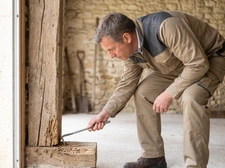
- Having the attic inspected by a qualified professional (such as a carpenter, contractor, or surveyor) to confirm that it is genuinely suitable for conversion, with adequate ceiling height, a compatible roof structure, and sufficient space for a future staircase.
- Clearly mentioning this potential in the property listing and during viewings, providing factual information such as ridge height and available floor area, without claiming additional living space that does not yet officially exist. This distinction is essential to ensure an accurate and honest presentation of the property's current habitable area.
- Where appropriate, supplying one or more quotations from contractors. This reassures prospective buyers about the likely renovation costs without requiring you to finance or manage the work yourself.
This strategy offers two significant advantages. It avoids tying up your finances and time in renovations whose return on investment remains uncertain, while giving buyers the freedom to design and complete the conversion according to their own preferences and schedule.
Many purchasers—particularly young families looking for a home that can evolve with their needs—appreciate the opportunity to personalise future improvements rather than paying immediately for a finished room that may not suit their tastes.
A local Capifrance real estate advisor can also help present this type of potential effectively, just as they would highlight other value-enhancing features such as a veranda or a garage. Although these features are not always reflected directly in the price per square metre, they often play an important role in buyers' purchasing decisions.
Regulatory Considerations Before Starting an Attic Conversion
Planning Permission or Building Permit
Converting an attic is not merely an interior renovation from an administrative standpoint.
Whenever the work modifies the exterior appearance of the building—for example by installing roof windows or dormers—or creates additional floor area, a prior declaration of works (déclaration préalable de travaux) is generally required.
Above certain floor-area thresholds, a building permit (permis de construire) may be necessary, particularly when the project involves substantial modifications to the roof structure.
These thresholds vary depending on the municipality and the applicable local planning regulations (PLU). It is therefore essential to consult your local planning authority before starting any work.
Failing to comply with these requirements can create real issues during the sale process. A buyer or their notary may require the works to be regularised before completion, potentially delaying—or even jeopardising—the transaction.
Updating the Energy Performance Certificate (EPC)
An attic conversion often improves the property's energy efficiency, particularly when high-quality insulation is installed.
For this reason, it is recommended to obtain a new Energy Performance Certificate (EPC/DPE) once the work has been completed and before marketing the property.
An up-to-date EPC reflecting the improved energy performance provides an additional selling point and helps avoid disputes arising from an outdated certificate.
Ensure Consistency Between the Asking Price and the Official Living Area
Finally, the asking price should always remain consistent with the property's officially measured habitable floor area (Carrez area for condominiums or official living space for detached houses).
Overstating the usable area of an attic in a property listing—before the conversion has actually been completed or officially recognised—may lead to disputes with buyers.
Transparency and accuracy remain the best guarantees of a smooth and secure property sale.
Example: Estimated Costs and Potential Increase in Value
Consider the following illustrative example.
A homeowner is selling a detached house with approximately 40 m² (430 sq ft) of convertible attic floor space.
However, because only half of the area has a ceiling height greater than 1.80 metres, only around 20 m² (215 sq ft) would qualify as official habitable living space after conversion.
Scenario A – Selling Without Renovation
The property is valued at €280,000 in its current condition.
The listing highlights the attic's conversion potential and includes an indicative quotation obtained from a local contractor.
This additional information may increase the property's appeal to buyers—particularly families seeking future expansion possibilities—without requiring any investment or delaying the sale.
Scenario B – Completing the Attic Conversion Before Selling
The owner undertakes a full conversion, including insulation, roof windows, a permanent staircase, and utility connections.
According to contractor quotations, the project costs approximately €35,000 to €45,000.
Once the work is completed and the EPC has been updated, a new valuation estimates the property's value at approximately €310,000 to €320,000 in a market with average demand.
In this example, the increase in value (€30,000–€40,000) is roughly equal to—or even lower than—the renovation costs (€35,000–€45,000) once construction time and associated expenses are taken into account.
In a stronger market, the same project could generate a greater return than its cost.
Conversely, in a weaker market, the financial outcome would likely be less favourable.
These figures are provided for illustration only and should not replace a professional valuation based on the specific characteristics of your property and local market.
Work with a Local Capifrance Real Estate Advisor
Balancing renovation costs, project duration, local market conditions, and regulatory requirements can be challenging.
A local Capifrance real estate advisor can help you assess the true added value that an attic conversion is likely to generate in your area.
They can compare your property with similar recent sales and help you determine the most appropriate strategy—whether that means completing the renovation, selling the property as it is while emphasising its development potential, or adjusting the asking price accordingly.
Don't hesitate to contact a local advisor before making your decision.
Conclusion
- Only fully converted attics—with proper insulation, sufficient ceiling height, and permanent access—count as official living space under the Carrez Law.
- The cost of an attic conversion varies considerably depending on the scope of the project, from basic finishing work to a complete structural transformation with roof openings and a permanent staircase.
- The increase in resale value depends primarily on the strength of the local real estate market. The same renovation may be highly profitable in one location and financially disappointing in another.
- In certain situations—such as a short selling timeframe, a weak market, or disproportionately high renovation costs—it may be more sensible to sell the property without carrying out the work.
- Marketing the home by highlighting its attic conversion potential, supported by contractor quotations, is often an effective alternative that saves both time and capital.
- Administrative requirements, including planning approval where necessary and updating the EPC after the renovation, should not be overlooked to ensure a smooth transaction.
obtain a free property valuationBefore deciding whether to convert your attic or sell the property in its current condition, and consult a local real estate professional who can assess your property's potential based on current market conditions.
FAQ
Does converting an attic always increase a property's selling price ?
Not necessarily. The increase in value depends on the amount of additional official living space created (based on sufficient ceiling height), the quality of the renovation, and, above all, the strength of the local real estate market. In slower markets, the increase in value may be lower than the cost of the renovation.
What ceiling height is required for an attic to count as official living space ?
As a general rule, only the areas where the ceiling height reaches at least 1.80 metres (5 ft 11 in) are included in the official habitable floor area and, for condominiums, in the Carrez Law calculation. A steeply sloping roof therefore reduces the amount of usable living space.
Do I need planning permission to convert an attic before selling my home?
In most cases, yes. A prior declaration of works is generally required, particularly if the project creates additional floor area or includes roof windows or other external modifications. Above certain thresholds, a building permit may also be necessary. Always check with your local planning authority before beginning the work.
Is it better to sell with a converted attic or leave the conversion to the buyer?
It depends on your available time, budget, and local market conditions. If you need to sell quickly or the market is relatively weak, selling the property as it stands while highlighting the attic's conversion potential—supported by contractor quotations—is often the safer and faster option.
Should the Energy Performance Certificate (EPC) be updated after an attic conversion?
Yes. It is recommended to obtain a new Energy Performance Certificate (EPC/DPE) after the work has been completed, as improved insulation generally enhances the property's energy performance. An updated EPC provides additional reassurance to buyers and reflects the property's improved efficiency.
How can I determine whether an attic conversion will be financially worthwhile before selling?
The most reliable approach is to compare two professional property valuations: one based on the home's current condition and another assuming the attic has been converted. You should then compare the estimated increase in value with several contractor quotations and review recent comparable sales in your local market.
Can an undeclared attic conversion delay or prevent a property sale?
Yes. If the required planning approvals were not obtained, the buyer or their notary may request that the work be regularised before completion. This can delay—or in some cases jeopardise—the transaction.
Are there other home improvements that can have a similar impact on resale value?
Yes. Other improvements, such as adding a garage, carport, or veranda, follow the same principle: their contribution to resale value depends on their cost, the local property market, and buyer expectations. Evaluating these improvements should always take local market conditions into account.
Author :

Frédéric Rémy – Director of Commercial Performance
A real estate professional for several years within the Capifrance network, I would like to share with you some essential advice to help you succeed in your real estate project with the support of our advisors.