









The mobility lease is a short-term furnished rental agreement created by the 2018 ELAN Law to meet the temporary housing needs of students and people in professional mobility, in France. It is increasingly appealing to landlords thanks to its flexibility, the absence of automatic renewal, and the elimination of the security deposit. This article explains how it works, the conditions under which it applies, and the tangible benefits it offers to rental property investors.
In Summary
- The mobility lease is reserved for specific groups (students, interns, employees on temporary assignments or in training) and lasts from 1 to 10 months, with no automatic renewal.
- The property must be furnished in accordance with the list established by decree, and no security deposit may be required from the tenant.
- Rent is freely determined, except in rent-controlled areas where rent control rules apply in the same way as for a standard furnished lease.
- For the landlord, this agreement offers flexibility, an easier exit, and an attractive position in markets with high rental turnover.
Definition of the Mobility Lease and Eligible Tenants
An Agreement Created by the ELAN Law
The mobility lease was introduced by Law No. 2018-1021 of November 23, 2018, known as the ELAN Law, and codified in Article 25-12 of the French Construction and Housing Code. It is a specific type of furnished rental agreement designed to provide a flexible housing solution for people experiencing geographical or professional mobility. Unlike a standard furnished lease, it is not governed by the law of July 6, 1989, but by an independent legal framework better suited to short-term stays.
Who Can Benefit From It
The mobility lease is exclusively intended for tenants who, when signing the agreement, can demonstrate that they fall into one of the following situations: student, apprentice, intern, person undergoing vocational training, person on a temporary assignment as part of their professional activity, person undergoing a professional transfer, or person performing civic service. The landlord must verify that the prospective tenant falls into one of these categories, and supporting documentation is generally requested when the tenant moves in. This characteristic makes the mobility lease particularly well suited to university cities and dynamic employment areas.
Duration and Property Requirements
A Regulated Duration With No Automatic Renewal
The mobility lease is entered into for a period ranging from 1 to 10 months. It may be renewed or extended one or more times, provided that the total duration never exceeds 10 months. Once this period has elapsed, the parties must sign a new agreement, generally a one-year standard furnished lease. An important point for the landlord: there is no automatic renewal. The agreement ends automatically on its expiry date, with no notice required from the tenant, which considerably simplifies rental management.
Accommodation That Must Be Furnished
The property rented under a mobility lease must meet the criteria for decent furnished accommodation, with minimum furnishings established by decree: bedding, window-covering devices in bedrooms, cooking hobs, an oven or microwave oven, refrigerator, crockery, kitchen utensils, table, chairs, storage shelves, lighting fixtures, and household cleaning equipment appropriate to the property. This list is identical to the one required for any standard furnished rental. For a landlord preparing a property intended for this type of rental, it may be useful to contact a local Capifrance real estate advisor to assess the property's compliance and rental potential.
No Security Deposit and Rent Rules
No Security Deposit: A Key Specific Feature
The mobility lease clearly differs from a standard furnished lease through the absolute prohibition on requiring a security deposit. Article 25-17 of the French Construction and Housing Code is clear on this point: no amount may be requested from the tenant for this purpose, regardless of the property's value. In return, the landlord may request a personal guarantor or use Action Logement's Visale guarantee, a free scheme that covers unpaid rent and certain rental property damage. This solution provides security for the landlord while complying with the legal framework.
Freely Determined Rent, Except in Rent-Controlled Areas
The amount of rent is generally freely determined by the landlord, with no obligation to justify it in relation to a reference rent. However, if the property is located in a rent-controlled area subject to rent control measures (Paris, Lille, or other affected urban areas), the same rent-control rules as those applicable to a standard furnished rental apply. It is therefore essential to check, before setting the rent amount, whether the property is located in a municipality covered by this scheme.
The Benefits of the Mobility Lease for Landlords
Valuable Flexibility
The mobility lease allows the owner to adjust the rental period to the tenant's actual needs, between 1 and 10 months, without the constraints of a one-year commitment that can be renewed. This flexibility is particularly valuable for landlords who want to retain the possibility of recovering their property quickly, for example for personal use or resale.
A Simplified Lease Exit
The absence of automatic renewal prevents the landlord from being committed beyond the initially agreed period. When the agreement expires, the tenant must leave the property without any specific notice being required, which greatly facilitates re-renting the property, particularly when arranging several successive mobility leases with new eligible tenants.
A Strong Market in Certain Areas
In university cities and employment areas with high professional mobility, demand for this type of accommodation is steadily increasing. Students on internships, executives on temporary assignments, or employees undergoing a professional transfer regularly look for ready-to-use furnished housing for a few months. A landlord investing in this niche can therefore benefit from faster rental turnover and a differentiated market position. To assess the value of a property intended for this type of rental, a free property valuation is a useful first step before undertaking any purchase or rental project.
Landlord Obligations Under a Mobility Lease
The mobility lease does not reduce the owner's obligations regarding the safety and decent condition of the accommodation. The landlord must provide the same technical diagnostics as for any standard furnished rental: energy performance certificate (DPE), statement of natural and technological risks, statement concerning the risk of exposure to lead where applicable, and electricity or gas diagnostics if the installations require them. The property must also comply with the standards of decency established by regulations, particularly with regard to minimum floor area, the absence of risks to occupants' safety, and access to essential facilities. The mobility lease agreement must also be drawn up in writing and explicitly state the reason for using this type of rental, failing which it may be reclassified as a standard furnished lease.
Comparison With a Standard Furnished Lease and Seasonal Rental
Mobility Lease vs. Standard Furnished Lease
A standard furnished lease is entered into for one year, with automatic renewal, or for nine months for a student without automatic renewal. It requires a security deposit that may amount to up to two months' rent excluding charges. The mobility lease, on the other hand, is reserved for specific tenant profiles, lasts a maximum of 10 months, excludes any security deposit, and is never automatically renewed. It therefore offers greater flexibility but is intended for a more restricted audience.
Mobility Lease vs. Seasonal Rental
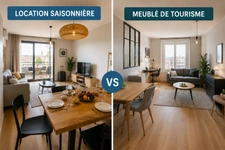
Seasonal rental, governed in particular through platforms offering tourist accommodation, targets short-stay customers for periods ranging from a few days to a few weeks, with a separate tax and regulatory framework, often subject to municipal authorization requirements in rent-controlled areas. The mobility lease, by contrast, is based on the principle of temporary main residence for the tenant, with a legal framework that protects the occupant and lighter administrative procedures for the landlord compared with traditional seasonal rental.
Practical Tips for Getting Started
Before offering a property under a mobility lease, it is recommended to check the eligibility of the geographical area, particularly whether rent control applies, and to ensure that the accommodation meets the required standards of decency and equipment. Drafting a compliant agreement, clearly stating the reason for using the mobility lease and the tenant's situation, helps avoid any risk of reclassification. It is also advisable to seek the assistance of a professional to secure the rental process and target the right tenant profiles. Consulting our property listings can also help identify properties suited to this type of rental in high-demand areas, such as university cities or dynamic economic activity zones.
Conclusion
The mobility lease is a modern and flexible rental solution designed to meet the temporary housing needs of a clearly identified audience. For landlords, it represents an interesting alternative to the standard furnished lease, with simplified management thanks to the absence of automatic renewal and a security deposit. When properly managed, this scheme can be effectively incorporated into a rental investment strategy, particularly in cities with high levels of student or professional mobility.
FAQ
Is the Mobility Lease Available to All Tenants?
No, it is reserved for specific groups who can demonstrate a situation of mobility: students, apprentices, interns, people undergoing vocational training, people on temporary assignments, or people undergoing a professional transfer. An employee in a stable position with no particular mobility requirement is not eligible. The landlord must verify this eligibility before the agreement is signed.
Can a Mobility Lease Be Renewed Beyond 10 Months?
No, the total duration of the mobility lease, including renewals, can never exceed 10 months. At the end of this period, the parties must enter into a new type of agreement, generally a standard furnished lease, if they wish to continue the rental.
Can the Owner Require a Security Deposit Under a Mobility Lease?
No, the law formally prohibits requiring a security deposit under a mobility lease, regardless of the value of the accommodation. The landlord may, however, request a guarantor or use Action Logement's Visale guarantee to protect against unpaid rent.
Is the Rent for a Mobility Lease Completely Unrestricted?
Rent is generally freely determined by the owner. However, if the accommodation is located in an area subject to rent control, the same rules as those applicable to a standard furnished rental apply and limit the amount that may be charged.
What Diagnostics Must the Landlord Provide for a Mobility Lease?
The obligations are identical to those applicable to a standard furnished rental: energy performance certificate, statement of natural and technological risks, and, where applicable, lead, electricity, or gas diagnostics. The accommodation must also meet the legal standards of decency.
Is the Mobility Lease Beneficial for a Rental Property Investor?
It can be, particularly in university cities or areas with high professional mobility, thanks to faster rental turnover and simplified management at the end of the agreement. However, it is important to carefully assess the local market before getting started, for example by relying on a property valuation and the support of a professional.
Author
Frédéric Rémy – Director of Sales Performance

A real estate professional with several years of experience within the Capifrance network, I would like to share essential advice with you to help you successfully complete your property project with our advisors.


