







It is worth waiting for the new 2027 DPE calculation before putting your apartment on the market only if it is heated by electricity and its rating is close to a threshold, particularly if it is rated F or G, or if it is a studio or a small apartment. In that case, waiting a few weeks, until 1 January 2027, could move it up a class and reduce the price discount, especially as the update will be free and will not require a new visit. If your apartment is heated by gas, fuel oil or a non-electric collective heating system, the new calculation will change nothing: waiting brings no benefit. In any case, you can prepare the sale now and publish the listing with the updated rating in January.
In summary
- On 1 January 2027, the DPE conversion coefficient for electricity drops from 1.9 to 1.7.
- Apartments heated by electricity, particularly small ones, are the most affected.
- No rating will be downgraded; the update will be free on the ADEME's DPE Observatory.
- Preparing the sale in November-December and publishing in January means you will be ready ahead of the spring buyers.
What the 2027 DPE changes for apartments
A new coefficient for electricity
After a first reduction from 2.3 to 1.9 on 1 January 2026, which is said to have taken around 850,000 homes out of classes F and G, the coefficient will fall to 1.7 on 1 January 2027. The official explanations of the recalculation are available on Service-Public.fr. To gauge the effect on your property, request an estimate of your apartment that takes into account both possible ratings.
Small apartments particularly affected
Studios and small apartments, often heated by electric convectors and penalised by their small surface area, are among the homes most often rated F or G. They are also the ones that benefit most from the revised calculation.
The case of collective heating
If the building has collective gas or fuel oil heating, the new coefficient has no direct effect on your rating. Only the electric portion (hot water, ventilation) may change slightly.
The collective DPE and the individual DPE
In a co-ownership building (copropriété), an apartment's DPE may be produced individually or based on the building's DPE, particularly where the heating is collective. Co-ownerships are gradually having a collective DPE carried out, according to a schedule that depends on their size. To find out the situation for your home, check your diagnostic report and ask your property manager (syndic).
Thresholds adapted for small surface areas
Since July 2024, the energy class thresholds have been adjusted for homes of less than 40 m², which were penalised by the calculation method. Combined with the new electricity coefficient, this adjustment can significantly improve the rating of studios and small T2 apartments (two-room apartments).
What the new calculation does not change
The estimated energy costs, expressed in euros in the DPE, remain the same since the home's actual consumption does not change. Only the conversion into primary energy changes. Attentive buyers will therefore also look at this amount, which reflects the home's running costs.
Wait or sell now: the decision grid
Your apartment | Recommendation |
|---|---|
Electric heating, rated F or G | Prepare now, publish with the updated rating in January |
Electric heating, rated E and close to the D threshold | Waiting for the update may increase the value of the property |
Electric heating, already rated C or D | Little at stake: sell when your plans are ready |
Individual or collective gas heating | No benefit in waiting |
Buyer already found | Do not delay the sale: the rating can be updated before the deed of sale (acte de vente) |
The cost of waiting
Waiting until 1 January 2027 amounts to just a few weeks for a property whose listing is ready. But if you wait without preparing the sale, you risk missing the busiest months of the start of the year. Waiting is only worthwhile if the time is used to prepare the valuation, the documents, the photos and the listing.
If your apartment is rented out
For a rented apartment, the stakes are even higher: a property that moves from F to E will still be able to be rented out after 2028, which appeals to investors who wish to keep the existing tenant in place. If you are selling an occupied apartment, updating the DPE (energy performance diagnostic) can therefore significantly increase the value of your property in the eyes of this group of buyers.
What you gain by listing with a better rating
Less of a discount
Properties rated F or G are often negotiated with a discount of more than 10%. Moving out of this category reduces the downward pressure on the price.
Investors coming back
An F-rated apartment will no longer be able to be rented out under a new lease from 1 January 2028. If it becomes an E, it can be rented out again until 2034, which widens the pool of buyers to include investors.
Good market timing
January and February are months when buyers begin their searches for the spring. Listing at that time with an improved rating maximises visibility.
A more visible listing
Many buyers filter their searches by energy class, excluding F and G properties. A better rating makes your apartment appear in more search results, which multiplies the number of enquiries as soon as the listing goes online. Try it yourself by browsing the apartments for sale in your town or city with a filter on energy class.
Better-financed buyers
Some banks offer more favourable terms for the purchase of energy-efficient properties, and buyers factor future renovation costs into their budget. A better rating therefore reassures both the buyer and their bank.
Reassured owner-occupiers
For a buyer who wants to live in the property, a better rating provides reassurance about the future resale value and about the absence of any obligation to carry out works if the property is later rented out. Even if actual consumption does not change, the perception of the property improves.
Prepare the sale now
- Check the date of your DPE: if it dates from before July 2021, it is no longer valid.
- Gather the co-ownership documents (meeting minutes, summary information sheet, multi-year works plan).
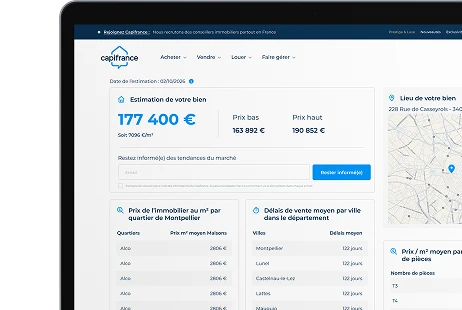
- Have your apartment valued, taking both possible ratings into account.
- Prepare the photos and the listing, then publish as soon as the rating is updated in January.
Prepare a listing that is ready to publish
Have the photos taken and the listing written in December, with two versions: one with the current rating and one with the expected rating. As soon as the DPE update is available, your advisor publishes the right version without losing any time. A local Capifrance advisor can prepare these two versions and publish as soon as the update is available.
Have the effect of the rating valued
Ask your advisor to estimate the price of your apartment with the current rating and with the expected rating. The difference shows you precisely what you stand to gain by waiting for the update, and allows you to make an informed decision.
Examples: three apartments, three decisions
To illustrate the decision grid, here are three typical situations. The amounts and effects are indicative.
A studio heated by electric convectors, rated F
A 20 m² studio near a university, rated F and just a few kWh away from the E threshold. Valued at €95,000 as it stands, it appeals mainly to investors, who know it will not be rentable from 2028 if it remains rated F. If it moves up to E on 1 January 2027, it becomes rentable again until 2034 and can come closer to the value of a comparable E-rated studio, at around €103,000. Here, preparing the sale in December and publishing the listing in January with the updated rating is clearly the winning approach.
A three-room apartment (T3) heated by a heat pump, rated D
A 68 m² family apartment, already rated D. The new calculation could move it up to C, but the effect on the price would be limited: owner-occupier buyers are mainly sensitive to location, size and condition. If the owner is ready to sell, there is no need to wait.
A two-room apartment (T2) with collective gas heating, rated E
A 45 m² apartment in a 1970s building with a collective gas boiler. The new electricity coefficient will have no effect on its rating. Improving its DPE (energy performance diagnostic) would require works decided by the co-ownership. The owner is better off selling when their project is ready, presenting the co-ownership's multi-year works plan.
The expert's view
"The new 2027 DPE calculation will change the rating of many small apartments heated by electricity, and it is a real opportunity for their owners. A studio that moves out of class F becomes attractive again to investors, who account for a large share of buyers of small properties. But I caution against passive waiting: waiting until January only makes sense if you prepare the sale in parallel. My advice is to have the property valued now, taking both possible ratings into account, to gather the co-ownership documents and to prepare the listing. As soon as the update is available, you publish. For apartments heated by gas or by collective heating, however, the new calculation changes nothing: there is no reason to delay a sale project that is ready."
— Frédéric Rémy, Commercial Performance Director at Capifrance
Conclusion
Waiting for the new 2027 DPE calculation is only worthwhile for apartments heated by electricity, especially small properties rated F or G. For these, preparing the sale now and publishing in January is the winning strategy. For the others, it is better to sell when your project is ready.
Request a valuation of your apartment that takes into account the possible effect of the 2027 DPE, compare it with apartments for sale in your city and get in touch with a local Capifrance advisor. Do you know a studio owner who is affected? Recommend them by becoming a business referrer.
FAQ - Frequently asked questions
When does the new DPE calculation come into force?
On 1 January 2027, with the electricity conversion coefficient reduced to 1.7.
Do I need to have a new diagnostic done to benefit from the new calculation?
No, a free update will be offered on ADEME's DPE Observatory for valid DPEs, without a new visit.
My compromis de vente (preliminary sales agreement) is signed: can the rating change before the final deed?
Yes, the update can be sent to the notary, but it does not call into question the agreed price.
Is an apartment with collective gas heating affected?
No, except for the share of electricity used, which generally remains small.
My apartment is heated by gas but I have an electric water heater: am I affected?
Slightly: the share of electricity used for hot water benefits from the new coefficient, which may be enough if your home is very close to a threshold.
Can the buyer negotiate by citing the old DPE?
They will negotiate on the basis of the DPE in force at the time of the offer. Hence the value of publishing the listing with the updated rating.
Can a studio rated G move up to E?
It is possible for some electrically heated homes close to the thresholds, thanks to the combined changes of 2024, 2026 and 2027, but each case must be checked.
Is the DPE update chargeable?
No, the update linked to the new electricity coefficient will be free on ADEME's DPE-Audit Observatory, without a new visit.
What should I do if my DPE dates from before July 2021?
It is no longer valid: you must have a new diagnostic carried out, which will directly apply the rules in force at the time it is done.
Does the new calculation apply to DPEs carried out in 2026?
Yes, DPEs that are still valid can be updated free of charge from 1 January 2027; those carried out after that date will apply the new coefficient directly.
Should buyers be told that an update is expected?
If the listing is published before January, state honestly that the rating could change with the new calculation, without presenting that change as certain.
Are apartments with collective electric heating affected?
Yes, the new coefficient applies to all electricity consumption, including when it comes from a collective system, which may improve the rating of these homes.
Author
Frédéric Rémy – Director of Sales Performance

A real estate professional with several years of experience within the Capifrance network, I would like to share essential advice with you to help you successfully complete your property project with our advisors.