







Are you looking to invest in French real estate? Real estate investment remains, in 2026, one of the French people's favorite ways to invest — and for good reason. With mortgage rates back down to around 3.3% over 20 years for the best profiles, the leverage effect of borrowing is once again particularly attractive.
But not all investments are equal: yield, taxation, management effort, and risk level vary widely from one strategy to another. In this article, we review the top 5 real estate investments in France in 2026, explaining for each one why it's attractive, how to calculate its profitability, and how to invest. Information up to date as of 2026.
👉 Ready to take action? Discover the Capifrance property listings to find the best investment opportunities across France.
In brief
- A favorable context:mortgage rates back to around 3.3% restore the power of leverage, in a market that is more balanced between buyers and sellers.
- Five strategies to know:furnished rental (LMNP), unfurnished rental and property tax deficit, short-term (seasonal) rental, house-sharing (colocation), and SCPI (real estate investment trusts / "paper property").
- Profitability, your No. 1 compass: think in terms of net yield and cash flow, not just gross yield.
- Location is still king: solid rental demand, a dynamic employment area, and a good price-to-rent ratio matter more than any tax scheme.
Ready to invest? Capifrance listings cover all of France to help you find the property that fits your strategy.
The 2026 context: why (re)invest in real estate in France
After several turbulent years, the French real estate market has stabilized. Interest rates, which had surged in 2023, have come back down to around 3.3% to 3.5% over 20 years, restoring purchasing power to buyers and once again making borrowing worthwhile. Real estate keeps its historic strengths: a tangible asset, the ability to borrow in order to invest (leverage), regular income, and long-term capital appreciation.
Be careful, though: investing without a strategy remains risky. The disparities between regions are widening, energy constraints (the DPE, France's energy performance diagnostic) weigh on certain properties, and taxation changes regularly. Hence the importance of choosing your type of investment — and your location — carefully.
Key takeaways
- Rates around 3.3% revive the appeal of investing on credit in France in 2026.
- The golden rule remains: location, location, location — favor cities with strong rental demand.
How to calculate the profitability of a real estate investment
Before comparing strategies, master the three key indicators. They apply to most direct investments.
Gross yield gives a first idea: (annual rent ÷ purchase price) × 100. Simple, but incomplete, since it ignores costs.
Net yield is far more reliable: (annual rent − annual costs) ÷ total purchase price × 100. It factors in property tax, non-recoverable charges, insurance, management fees, maintenance, and rental vacancy. This is the indicator to look at first.
Net-net yield (or after-tax yield) adds the impact of taxation, which depends on the chosen regime (micro, actual expenses, LMNP…) and on your marginal tax bracket.
Finally, cash flow measures what is left (or missing) each month once the loan and all charges are paid: rent − (loan installment + charges + taxes). Positive cash flow means the property funds itself and earns you money from the start.
Good to know: always plan a safety margin (around 20%) to absorb vacancy, unforeseen events, and works. An enticing gross yield can shrink once all charges are deducted.
Top 5 real estate investments in France in 2026
Here are the five most relevant strategies this year, from the most popular to the most "hands-off."
1. Furnished rental (LMNP): investors' favorite
Why it's attractive. Furnished rental under the LMNP status (Loueur Meublé Non Professionnel, the French non-professional furnished-landlord scheme) remains the flagship strategy. It generates rents 10 to 20% higher than unfurnished rental, targets strong demand (students, young professionals, job mobility), and benefits from favorable taxation: under the actual-expenses regime, the depreciation of the property and the furniture can sharply reduce, or even cancel, the tax on rents for years.
Indicative profitability: often 4 to 7% net, depending on the city and the type of property (small city-center units post the best yields).
How to invest. Target a studio or one-bedroom in a city with strong rental demand, furnish it with care, and opt for the actual-expenses regime with the support of an accountant. Point to watch in 2026: the Le Meur Act changed the treatment of depreciation when calculating the capital gain on resale, and the social contributions on furnished rents have evolved — check your setup with a professional.
2. Unfurnished rental and the property tax deficit: older properties to renovate
Why it's attractive. Buying an older property to renovate and letting it unfurnished offers a double advantage: a lower purchase price (hence better capital-gain potential) and, above all, the mechanism of the property tax deficit (déficit foncier). Deductible works reduce your property income, then your overall income up to €10,700 per year — a powerful tax lever for taxed households. The Denormandie scheme, which has been extended, also rewards the renovation of older homes in certain mid-sized French towns.
Indicative profitability:3.5 to 6% net, with strong appreciation potential after works.
How to invest. Spot a property needing works in an eligible, dynamic city, cost the renovations precisely (several quotes), and anticipate improving the DPE, now decisive for letting and reselling.
3. Short-term (seasonal) rental: higher yield, active management
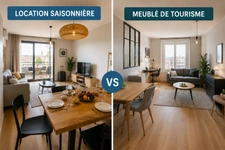
Why it's attractive. Short-term rental (the meublé de tourisme, or tourist furnished rental) often posts the best yield per square meter, particularly in tourist or tight-market areas. In return, it requires active management (cleaning, check-in, pricing) and is now more regulated since the Le Meur Act: revised micro-BIC allowances, registration with the town hall, local quotas.
Indicative profitability: potentially 6 to 10% gross, but highly dependent on the occupancy rate and costs (concierge service, platforms).
How to invest. Choose a high-footfall location, check the local regulations (change-of-use authorization, cap on nights) and the co-ownership rules, then outsource management to a concierge service if you're remote. Plan a margin for seasonality.
4. House-sharing (colocation): optimizing yield per square meter
Why it's attractive. House-sharing means letting a large home room by room: the sum of the rents clearly exceeds that of a standard rental, which boosts profitability. Demand is strong among students and young professionals, and the vacancy risk is spread across several tenants.
Indicative profitability: often 5 to 8% net, among the best in residential letting.
How to invest. Aim for a four- or five-room home that is well located (near campuses, transport, city center), fit out comfortable bedrooms and functional common areas, and get the legal framework right (a single lease or individual leases, joint-liability clause). House-sharing pairs very well with the LMNP status.
5. SCPIs: real estate with no management worries
Why it's attractive. The SCPI (Société Civile de Placement Immobilier, a French real estate investment trust), or "paper property," lets you invest in a diversified real estate portfolio (offices, retail, healthcare, logistics, in France and Europe) by buying shares, with no management on your part. It's the ideal solution to diversify, invest with a small ticket (from a few hundred to a few thousand euros), and receive regular income.
Indicative profitability: an average distribution rate of about 4.9% in 2025 (and around 4.8% projected for 2026), with some European SCPIs exceeding 5.5%.
How to invest. Select 2 or 3 complementary SCPIs by cross-checking several criteria (occupancy rate, seniority, fees, strategy), spread your purchases over time, and choose the right wrapper (in cash, on credit for the leverage effect, via life insurance, or in bare ownership to optimize taxation). Keep in mind that an SCPI is an illiquid investment with no guaranteed capital.
Key takeaways
- For direct-investment yield, furnished rental (LMNP) and house-sharing dominate in 2026.
- To cut tax through works, consider the property tax deficit and older properties to renovate.
- To invest without management, SCPIs offer diversification and passive income.
How to choose the right investment for your profile
There is no universal "best" investment: the right choice depends on your goals, your budget, your taxation, and the time you can devote to it.
Looking for regular supplementary income? Furnished rental, house-sharing, or income SCPIs fit the bill. Aiming for long-term appreciation and a transfer of your estate? Older properties to renovate or bare ownership are relevant. Want to reduce your tax? The property tax deficit (unfurnished rental) or LMNP depreciation (furnished rental) are your allies. Short on time? Favor SCPIs or delegate the management. A single property can tick several boxes, but rarely all: define your priority goal before deciding.
Points to watch and taxation in 2026
A few reminders to invest with full awareness. On the tax side, several parameters have shifted: the Le Meur Act (2025) tightened the regime for tourist furnished rentals and the calculation of the LMNP capital gain, and the social contributions on certain rental income evolved in 2026. The Pinel scheme ended on 31 December 2024: it is therefore no longer an option for a new investment. Finally, energy performance (the DPE) increasingly governs letting and reselling.
Good to know. This article is purely informational and does not constitute investment advice or personalized tax advice. The yields cited are orders of magnitude, with no guarantee. Before any commitment, have your project validated by a professional (advisor, accountant, notary).
Find the best investment opportunities in France with Capifrance
Once your strategy is defined, everything comes down to the choice of property: location, purchase price, rental and appreciation potential. This is where sourcing makes the difference.
The Capifrance property listings cover all of France and give you access to a wide range of opportunities — apartments, houses, buildings, properties to renovate — to bring your rental investment project to life. And to go further, a local Capifrance real estate advisor can help you spot high-potential properties, estimate profitability, and secure your acquisition.
👉 Explore the Capifrance property listings now and find the property that matches your investment strategy.
- Take advantage of the 2026 context: rates around 3.3% revive the leverage effect.
- Choose the strategy suited to your goal: furnished, unfurnished, seasonal, house-sharing, or SCPI.
- Think in net yield and cash flow, not just gross yield.
- Anticipate 2026 taxation (the Le Meur Act, the end of Pinel, the DPE) with a professional.
- Bet on location and find your property among the Capifrance listings.
FAQ
What is the best real estate investment in France in 2026?
There's no universal answer: it depends on your goals and profile. For yield, furnished rental (LMNP) and house-sharing lead the way. To cut tax, the property tax deficit (older properties to renovate) is effective. To invest without management, SCPIs are ideal. Location remains the decisive criterion.
How do you calculate the profitability of a rental investment?
Gross yield = (annual rent ÷ purchase price) × 100. Net yield deducts the costs (property tax, management, insurance, vacancy). Net-net yield factors in taxation. Finally, cash flow shows what's left each month after the loan and charges. Always think in net terms.
Should you invest on credit in France in 2026?
With rates around 3.3% over 20 years, the leverage effect of credit is once again very attractive: you invest with the bank's money, and the rents cover part of the installment. A solid file (down payment, low debt ratio) secures the best conditions.
Does the Pinel scheme still exist in 2026?
No. Pinel ended on 31 December 2024. To invest in new or older property with a tax advantage, turn to other levers such as the property tax deficit, Denormandie (older property to renovate), or LMNP depreciation.
What profitability can you expect from an SCPI in 2026?
The average distribution rate of SCPIs stood at around 4.9% in 2025 and is projected at around 4.8% in 2026, with some European SCPIs exceeding 5.5%. An SCPI remains an illiquid investment with no guaranteed capital: diversify and select carefully.
Where can you find properties to invest in in France?
You can browse the Capifrance property listings, which cover all of France (apartments, houses, buildings, properties to renovate), and rely on a local Capifrance advisor to identify high-potential opportunities and secure your purchase.
Information up to date as of the publication date (2026). Market data, yields, and tax schemes evolve and do not constitute a guarantee or personalized advice; consult a professional (advisor, accountant, notary) before any investment.
Author :

Frédéric Rémy – Director of Commercial Performance
A real estate professional for several years within the Capifrance network, I would like to share with you some essential advice to help you succeed in your real estate project with the support of our advisors.