






Dry rot is a wood-decaying fungus capable of silently destroying a house's roof timbers and floors by feeding on the wood. Its presence, often discovered late, can jeopardise a property sale if it is concealed or overlooked by the seller. This article explains how to recognise the signs of dry rot in a house, what legal obligations apply in France, and what precautions to take, both on the buyer's side and the seller's side.
In summary
- Dry rot is a fungus that develops in humidity, darkness and lack of ventilation, and which durably weakens structural timber.
- It can be identified by cottony white filaments, brownish-orange fruiting bodies, a musty smell and wood that cracks into small cubes.
- There is no mandatory dry rot survey at national level as there is for termites, but a duty to inform applies in areas delimited by prefectoral order.
- Dry rot concealed during a sale may be classified as a hidden defect and engage the seller's liability, hence the importance of full transparency and, if necessary, prior treatment.
What is dry rot and why does it appear
Definition of dry rot
Dry rot (Serpula lacrymans) is a wood-decaying fungus, meaning it feeds on the cellulose contained in wood. Unlike wood-boring insects such as termites, it develops in the form of filaments and can spread through walls, partitions and even certain porous materials, which makes it particularly difficult to contain once established. By colonising structural timber, roof frames, beams and floors, it progressively reduces their mechanical strength, leading to localised sagging or collapse in the most advanced cases.
The conditions favourable to its appearance
Dry rot needs very specific conditions to develop: persistent moisture in the wood, generally above 20%, poor ventilation that prevents this moisture from evaporating, darkness, and direct contact between wood and damp materials or surfaces. Cellars, poorly ventilated crawl spaces, unused attics, below-ground walls or homes that have suffered untreated water damage are therefore particularly at-risk areas. An old building, poorly ventilated or located in a humid region, is statistically more exposed.
Visual signs for spotting dry rot
Warning signs to watch for
Several signs should alert a buyer or owner during a property viewing. One may observe cottony white filaments resembling cotton wool, spreading over damp surfaces, as well as brownish-orange, pancake-shaped fruiting bodies, sometimes called "carpophores," which appear when the fungus is at an advanced stage. A mushroom or musty smell, persistent in a room, cellar or poorly ventilated space, is also a common indicator, as is wood that cracks into small cubes and loses all resistance to the touch, a phenomenon known as "cubical rot."
When to call in a professional
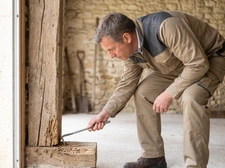
These signs are not always easy for a non-specialist to identify, especially when dry rot develops behind a partition or under a floor covering. If in doubt, calling on a property surveyor or an expert specialised in wood treatment is strongly recommended before committing to a transaction, whether a purchase or a sale.
Legal framework and disclosure obligations
A local obligation, not a systematic national survey
Unlike the termite survey, which is mandatory in areas delimited by prefectoral order wherever this risk has been identified, there is no dry rot survey mandatory nationwide for all property sales in France. However, in municipalities or parts of municipalities where a prefectoral order has delimited a dry rot presence zone, the seller is required to inform the buyer, through a pest and parasite report or a specific mention in the deed of sale, if they are aware of the fungus's presence in the property concerned.
Notifying the town hall in the event of detection
Beyond the obligation to inform the buyer, any occupant of a building, whether owner or tenant, who notices the presence of dry rot must inform the town hall of the municipality where the property is located. This declaration allows local authorities to monitor the evolution of the phenomenon and, if necessary, extend the perimeter of at-risk areas by prefectoral order. It is therefore useful, before any transaction, to enquire with the town hall or the prefecture about the existence of an order covering the property's area.
Consequences for a property sale
The risk of hidden defect
If a seller was aware of the presence of dry rot in their property and did not report it to the buyer, the latter may invoke the hidden defects warranty after the sale. This can lead to the sale being cancelled, a price reduction, or compensation, depending on the severity of the infestation and the damage found. Transparency from the negotiation stage onwards therefore remains the best protection, for both the seller and the buyer.
The impact on negotiation
Even outside any dispute, the discovery of dry rot, or simply suspicious traces, during viewings can have a direct impact on price negotiation. The buyer then factors the potential cost of treatment and repair work into their offer, which can represent several thousand euros in price reduction depending on the extent of the damage.
Treating dry rot
An often high cost
The treatment of confirmed dry rot generally represents a significant investment, which can vary greatly depending on the affected surface area, the accessibility of the contaminated wood and the extent of the necessary structural remedial work. This is not a simple cosmetic operation: a treatment project can involve removing coverings, probing the surrounding wood and sometimes replacing parts of the roof frame or flooring.
Treating the cause, not just the symptom
A fungicidal treatment alone is not enough if the source of moisture that favoured the development of dry rot is not identified and corrected. Drying out walls, improving ventilation, repairing a leak or infiltration: this preliminary work is essential to prevent the fungus from reappearing after treatment.
Practical advice for a buyer and a seller
For a buyer
During viewings, it is advisable to carefully inspect cellars, attics, crawl spaces and poorly ventilated areas, to notice any unusual smell and to directly ask the seller or their adviser about dry rot. In case of doubt, it is better to consult a diagnostician or an expert before signing a preliminary sale agreement. It is also useful to be accompanied by a local Capifrance property consultant, who is familiar with the specific features and at-risk areas of their sector.
For a seller
Transparency remains the best strategy: reporting any past or current presence of dry rot avoids later disputes and reassures the buyer of the seriousness of the sale process. Where possible, treating the problem before putting the property on the market helps secure the transaction and avoid a significant price reduction during negotiation. Before setting a price, a free property valuation that takes into account the actual condition of the property allows expectations to be adjusted realistically.
Conclusion
Dry rot remains a subject to be taken seriously in any property project, whether a purchase or a sale, as its structural and financial consequences can be severe if not detected in time. In the absence of a systematic mandatory diagnosis at the national level, vigilance largely relies on careful observation of the property, the use of qualified professionals in case of doubt, and compliance with the information obligations in force in areas covered by a prefectoral order. To approach this type of project with peace of mind, consulting our property listings supported by experienced consultants remains a good starting point.
FAQ
Is dry rot dangerous for the health of occupants?
Dry rot attacks wood and not directly human health, but it can foster a damp environment conducive to the development of mould, which may aggravate respiratory or allergic problems. Above all, it represents a risk to the structural soundness of the building.
Is a dry rot diagnosis mandatory when selling a property?
There is no mandatory dry rot diagnosis across the whole of the national territory, unlike the termite diagnosis. However, in areas defined by prefectoral order, the seller must inform the buyer if they are aware of the presence of dry rot in the property.
What should I do if I discover dry rot in my house?
You should quickly call in a professional to confirm the diagnosis and assess the extent of the contamination, then treat both the fungus and the source of moisture that allowed it to develop. The presence of dry rot must also be reported to the town hall of the municipality concerned.
How much does dry rot treatment cost?
The cost varies greatly depending on the affected surface area, the accessibility of the contaminated wood and the structural repair work required, which makes it difficult to give a single figure without a prior expert assessment. It is recommended to request several quotes from specialised professionals before committing.
Can a sale be cancelled if dry rot is discovered after signing?
If the seller was aware of the presence of dry rot and did not disclose it, the buyer can invoke the warranty against hidden defects, which may lead to the cancellation of the sale, a reduction in the price or compensation. This is why an honest declaration at the time of sale is essential to secure the transaction for both parties.
How can dry rot be distinguished from a simple damp problem?
A typical damp problem is mainly reflected in traces of infiltration, superficial mould or a musty smell, without necessarily affecting the strength of the wood. The presence of cottony white filaments, orange-brown fruiting bodies or wood that cracks into cubes is, on the other hand, characteristic of dry rot contamination and warrants the intervention of a specialist.
Author
Frédéric Rémy – Director of Sales Performance

A real estate professional with several years of experience within the Capifrance network, I would like to share essential advice with you to help you successfully complete your property project with our advisors.