






Every real estate investor in France, eventually asks the same question: should you aim for rents that cover (and exceed) the loan payment from the very first month, or accept a savings effort in order to bet on the property gaining value over ten or twenty years? In 2026, with mortgage rates stabilised at around 3.40% over twenty years, this trade-off between cash flow and capital appreciation shapes every rental purchase decision. Mid-sized cities appeal to investors in a hurry for income, while the large metropolitan areas remain the playing field of those who are thinking about wealth transfer and security. This article details both strategies, their risks, and how to choose yours according to your profile and objectives.
In summary
- Positive cash flow aims for net rent that exceeds charges and the loan payment, often achieved through shared rentals (colocation) or furnished lettings in mid-sized cities.
- Capital appreciation favours the large metropolitan areas and quality properties, with a monthly savings effort offset by long-term capital gains.
- Mortgage rates of around 3.40% in 2026 narrow the room for manoeuvre and make the choice of strategy even more decisive.
- The right trade-off depends on your investment horizon, your savings capacity and your objective: immediate income or building wealth over the long term.
Understanding the two main rental investment strategies
Before making a choice, the terms of the debate need to be set out clearly. A real estate investor may seek either a regular, immediate income or growth of their capital over time. The two approaches are not directly opposed, but they lead to very different choices in terms of city, type of property and management method.
The cash flow strategy: generating income from the first rent payment
The goal of positive cash flow is simple: the rents received fully cover the loan payment, the charges, the taxe foncière (property tax) and management costs, leaving a surplus each month. This approach appeals to investors who want to generate additional income quickly, or even build financial independence by accumulating self-financing properties.
The capital appreciation strategy: betting on the property's future value
Conversely, the wealth-building approach accepts a monthly savings effort, sometimes neutral or slightly negative cash flow, in exchange for a property located in an area where demand and prices are expected to rise durably. The aim is not immediate income but the building, and then the transfer, of an appreciated capital asset.
Positive cash flow: where and how to achieve it in 2026
Achieving positive cash flow is still possible in 2026, but margins have tightened with the rise in rates in recent years. This strategy now depends on a precise choice of location and of how the property is operated.
Mid-sized cities, the preferred ground for cash flow
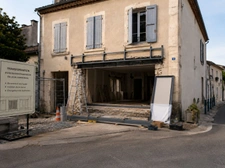
Dynamic mid-sized cities show gross yields significantly higher than those of the large metropolitan areas. Cities such as Saint-Étienne, Mulhouse, Limoges, Le Mans or Nîmes show gross yields of between 6% and 8%, whereas Paris or Lyon often peak at around 4%. This difference in purchase price, combined with genuine rental demand in student neighbourhoods or areas undergoing redevelopment, makes it easier to cover loan payments.
Shared rentals and furnished lettings: levers to maximise yield
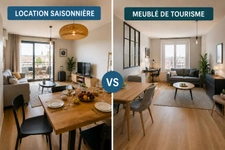
Renting a property room by room rather than as a whole to a single tenant can increase rental income by 20 to 40% on the same property, while reducing the risk of total vacancy. Furnished letting, for its part, often offers more favourable taxation (the LMNP regime) and higher rents than unfurnished letting. These two levers are frequently combined in university cities, where demand for furnished shared rentals is structurally strong.
Capital appreciation: betting on the large metropolitan areas
At the opposite end of the spectrum, the wealth-building strategy favours security and liquidity over immediate yield. It is aimed at investors able to sustain a savings effort over time.
Why the large metropolitan areas remain a safe haven
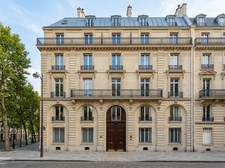
Major metropolitan areas secure the resale and liquidity of the property, even though they offer lower rental yields. The depth of the rental market, the diversity of tenant profiles and the resilience of demand make them investments that are less exposed to the risk of prolonged vacancy. A property in Paris or Lyon will almost always be easier to resell than a property in a secondary city that is losing its appeal.
The savings effort: an investment over fifteen to twenty years
When cash flow is negative or neutral, the difference comes down to the property's future appreciation and the gradual repayment of the borrowed capital. This approach requires a fifteen- or twenty-year outlook and a genuine ability to withstand a possible market downturn without being forced to sell at the wrong time. It is a strategy of patience, not of immediate returns.
The impact of credit and 2026 interest rates on the trade-off
The financing environment bears directly on the choice between the two strategies, because it determines the level of monthly payment that must be covered by rental income or by personal savings.
Stabilized rates that remain restrictive
Mortgage rates have stabilized at around 3.40% over twenty years in 2026. This level, higher than at the beginning of the 2020s, mechanically reduces borrowing capacity and makes it harder to achieve positive cash flow without a down payment or without a strengthened yield strategy (shared rental, furnished rental). It also makes the leverage effect less spectacular for wealth-building investors, who must revise their capital gain projections in light of higher rates.
Down payment, loan term and negotiation: parameters not to be overlooked
A larger down payment, a longer loan term or tight negotiation of the rate and the borrower's insurance can shift a project from negative cash flow to neutral, or even positive, cash flow. These parameters deserve particular attention before any purchase, whichever strategy is chosen.
Advantages, limitations and risks of each approach
Neither strategy is universally superior to the other: each has advantages and points of vigilance that must be weighed before committing.
Positive cash flow: financial freedom, but intensive management
The main advantage of positive cash flow is that it generates immediate income and, in theory, allows you to chain acquisitions together without committing additional savings. In return, this strategy demands more intensive management: tenant turnover in shared rentals, more frequent maintenance, and heightened vigilance regarding rental vacancy in markets that are sometimes less liquid than large cities. Properties rated F or G on the DPE (energy performance diagnostic) are now excluded from the rental market, which means renovation work must be anticipated to preserve profitability.
Capital appreciation: security, but tied-up capital
The wealth-building strategy offers better liquidity on resale and lower exposure to the rental uncertainties of a secondary market. Its main risk lies in the prolonged savings effort and in the uncertainty over the actual extent of the long-term capital gain, which depends on macroeconomic factors that are difficult to anticipate over fifteen or twenty years.
How to choose your strategy according to your investor profile
The choice between cash flow and capital appreciation is not a matter of a universal rule but of matching your personal objectives to your financial situation.
Goal: immediate income or financial freedom
If your priority is to quickly generate additional income, or to build up a self-financed portfolio one property at a time, the cash-flow strategy through shared or furnished rentals in a mid-sized city is the most consistent choice. However, it requires management time or a budget dedicated to delegation.
Goal: wealth transfer or long-term capital building
If you are aiming to pass on assets or to build capital over fifteen to twenty years, with no need for immediate income, the wealth-building strategy in a major metropolitan area, with maximum leverage, is a better fit for your profile. Neutral cash flow is generally sufficient there.
In both cases, a precise property valuation of the targeted property and its rental potential remains an essential step before any purchase decision.
Conclusion
Positive cash flow and capital appreciation are not rival strategies but two responses to different objectives. One favours immediate income at the price of more active management and a market that is sometimes more volatile; the other relies on security and longevity, at the price of a prolonged savings effort. With mortgage rates stabilised at around 3.40% in 2026, the trade-off depends more than ever on the quality of preparation: choice of city, type of property, rental method and the strength of the financing. Browsing the property listings available in your target area and speaking with a local professional remains the best way to refine your strategy before signing.
The Expert's View
"The most common mistake I see among investors is trying to apply the same strategy everywhere, without asking whether their real objective is income or capital appreciation. Positive cash flow obtained through shared rental (colocation) in a mid-sized city only makes sense if the investor accepts more intensive rental management and constant vigilance over local demand, because a secondary market can turn around faster than a major metropolis. Conversely, aiming for capital appreciation in a large city without having anticipated the monthly savings effort over fifteen or twenty years can put a household in difficulty if its personal situation changes. With rates that have stabilised at around 3.40% in 2026, borrowing capacity has tightened, and every financing decision weighs more heavily than it did a few years ago. My advice is always the same: start from the investor's life goals, not from the trend of the moment. A young professional who wants to build additional income quickly does not have the same horizon as a couple preparing to pass on assets to their children. Our advisors support each project with this reality in mind, weighing the property's rental potential, the strength of the financing and the client's real wealth objectives, to avoid trade-offs made by default rather than by choice."
— Frédéric Rémy, Commercial Performance Director at Capifrance
FAQ - Frequently Asked Questions
What is positive cash flow in rental investment?
Positive cash flow means that the rent received covers the full monthly mortgage payment, charges, property tax (taxe foncière) and management costs, leaving a net surplus each month for the investor.
Is capital appreciation riskier than cash flow?
It carries a different kind of risk: the monthly savings effort is certain, whereas the future capital gain depends on how the market evolves over fifteen to twenty years, a horizon that requires patience and the ability to absorb a possible downturn.
Do 2026 mortgage rates make positive cash flow impossible?
No, but with rates stabilised at around 3.40% over twenty years, it becomes harder to achieve without a reinforced yield strategy such as shared rental (colocation) or furnished rental (meublé), particularly in mid-sized cities where purchase prices are more accessible.
Is shared rental (colocation) suitable for all investors?
No, it mainly suits investors prepared to take on more intensive management, with more frequent tenant turnover and regular maintenance, in exchange for a yield that is often 20 to 40% higher than standard rental.
How do I know which strategy matches my property investor profile?
The choice depends mainly on your objective: immediate income and active management for cash flow, or long-term wealth building and transmission for capital appreciation. Speaking with a professional helps refine this trade-off according to your situation, and you can find a real estate advisor near you to be supported.
Author
Frédéric Rémy – Director of Sales Performance

A real estate professional with several years of experience within the Capifrance network, I would like to share essential advice with you to help you successfully complete your property project with our advisors.