









New real estate development of 7 units in Saint-Clar-de-Rivière (31600)
Description of this new development in Saint-Clar-de-Rivière
Un emplacement stratégique aux portes de Toulouse
À moins de trente minutes de la place du Capitole, le Château Saint‑Clar‑de‑Rivière bénéficie d’une situation privilégiée au sein de l’aire d’attraction toulousaine. La région, portée par la première filière spatiale française et par un tissu économique en constante expansion, s’impose comme l’un des pôles les plus dynamiques du pays. Toulouse attire chaque année un grand nombre d’étudiants, d’ingénieurs et de chercheurs, grâce à la richesse de son offre universitaire et à la présence d’écoles d’excellence, ce qui renforce la vitalité démographique et la solidité du marché immobilier local. À proximité immédiate de Muret, cinquième ville la plus peuplée de Haute‑Garonne et parfaitement connectée, le château s’inscrit dans un environnement où les opportunités d’investir dans un Monument Historique restent exceptionnelles.
Un patrimoine classé d’exception
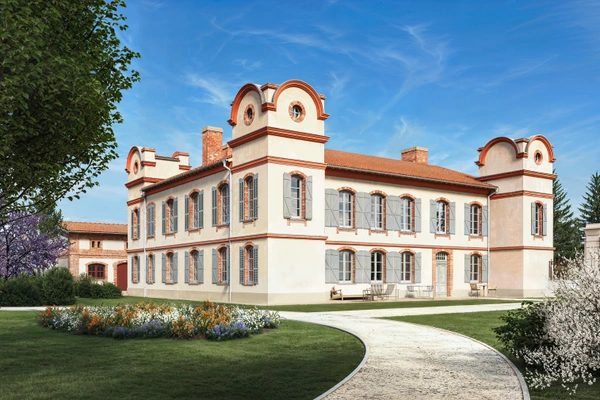
Au centre de Saint‑Clar‑de‑Rivière, le château déploie une silhouette élégante et parfaitement identifiable. Inscrit au titre des Monuments Historiques depuis 1999, il bénéficie d’une reconnaissance officielle pour la valeur de ses éléments architecturaux et paysagers. Cette inscription garantit que le projet de réhabilitation se fera dans le plus grand respect des caractéristiques d’origine, tout en assurant la protection durable de ce patrimoine rare.
Un ensemble architectural et paysager d’exception
Édifié à la fin du XVIIIᵉ siècle puis embelli au XIXᵉ, le château présente une architecture classique, identifiable par son plan rectangulaire, ses quatre tours d’angle et une façade sobre alternant enduits à la chaux et bandeaux de briques. Les volets en bois massif d’origine ont été intégralement conservés, tout comme l'hostellerie et les intendances construites autour de 1900, dont le traitement architectural prolonge l’harmonie du château. À l’intérieur, la demeure conserve des éléments historiques remarquables, parmi lesquels un escalier en bois majestueux aux ferronneries travaillées, des parquets anciens, des moulures, des cheminées d’époque et une charpente préservée. L’accès au domaine est marqué par un grand portail en fer forgé, soulignant la noblesse du site. L’ensemble s’inscrit au cœur d’un parc planté d’arbres centenaires, où un travail paysager attentif permet de révéler la richesse botanique du lieu, de préserver les essences remarquables et de restituer certains tracés historiques. Ce jardin, soigneusement valorisé, formera un véritable écrin pour les futurs habitants.
Une réhabilitation d’excellence
Nouveau Siècle mènera la restauration du château avec des artisans qualifiés — gypsiers, ferronniers, menuisiers — dont le savoir‑faire permettra de sublimer les éléments remarquables du bâti. Chaque intervention sera réalisée dans le respect des techniques traditionnelles, afin de préserver l’âme du lieu tout en l’adaptant aux usages contemporains. Les appartements offriront des volumes généreux, de belles hauteurs sous plafond et une lumière naturelle abondante. Certains logements seront traversants, d’autres profiteront de jardins privatifs, offrant à chaque résident une expérience unique. L’ensemble de la réhabilitation alliera confort, caractère et durabilité grâce à des prestations soignées et une sélection rigoureuse des matériaux.
7 lots d'habitations disponibles
-
PriceSurface areaCharacteristics
-
Apartment 35m2Parking Floor : 0339 303€
-
339 303€35m2Parking - Floor : 0
-
PriceSurface areaCharacteristics
-
Apartment 46m2Parking Floor : 1378 182€
-
378 182€46m2Parking - Floor : 1
-
Apartment 46m2Parking Floor : 1411 278€
-
411 278€46m2Parking - Floor : 1
-
Apartment 54m2Parking Floor : 1444 373€
-
444 373€54m2Parking - Floor : 1
-
Apartment 50m2Parking Floor : 0449 101€
-
449 101€50m2Parking - Floor : 0
-
PriceSurface areaCharacteristics
-
Apartment 50m2Parking Floor : 0452 813€
-
452 813€50m2Parking - Floor : 0
-
Apartment 73m2Parking Floor : 0595 862€
-
595 862€73m2Parking - Floor : 0
Are you interested in this property? Contact us !






Legal guarantees: Financial completion guarantee, apparent defects guarantee, perfect completion guarantee, two-year guarantee, and ten-year guarantee.
Energy performance: RT2012 and RE2020
Accessibility to housing: disability standards, elevator, etc.
Standards: thermal, acoustic, etc.
A customizable home: modification works (bathtub, electrical outlet) and/or interior fittings such as tiling, painting, bathroom furniture, etc.
Reduced notary fees: approximately 3% vs. 7 to 8% for older properties
State aid: Zero-interest loan, Pinel scheme, etc.
Total or partial exemption from property tax: for the two years following the construction
Reduced VAT: Possibility of buying properties in ANRU zones and benefiting from a 5.5% VAT under certain income conditions.
First-time homebuyers can benefit from the zero-interest loan (PTZ) under certain income conditions.
First-time homebuyers refer to households that have not owned their primary residence in the two years preceding the loan offer and whose income does not exceed the established ceiling.
The assessment of income is based on the reference taxable income from the year N-2 of all the individuals intended to occupy the property.
The amounts of the PTZ and the income limits vary depending on the location of the property (Zone A, B, or C).
Searching for a property that meets your needs (get assistance from a specialized advisor from Capifrance)
Signing a reservation contract detailing the property (size, location, description), price, delivery date, etc. The buyer pays a deposit to the developer into an escrow account.
Financing the purchase with a loan and signing the loan offer
Signing the deed of sale at the notary's office, including all information about the property, the price and payment terms, the delivery date, and the guarantees.
Customizing the property and selecting materials in agreement with the developer (modification works).
Delivery of the property, allowing for the identification of any defects, which are addressed within a month following delivery by the companies involved in the construction.
RE2020 is the new energy and environmental regulation for all new construction. The developer commits to a certain level of building energy consumption and greenhouse gas emissions.
The aim is to design and build the future living spaces for the French population while pursuing three major objectives set by the government:
An objective of energy efficiency and energy decarbonization;
A reduction in the carbon footprint;
Ensuring comfort in case of extreme heat.
This guarantee applies for 10 years from the date of completion of the work. It protects against potential damages that could compromise the solidity of the construction and make it uninhabitable. Cracks, leaks, roofing problems, etc.: the builder is required to intervene if these damages are not due to normal wear and tear or poor maintenance of the dwelling.
Do you need advice for your real estate project? Contact a Capifrance advisor
