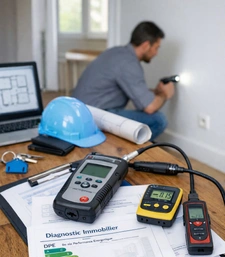









Installing a heat pump before selling your home in France can significantly improve its energy rating and reassure buyers who are increasingly attentive to the DPE, the French energy performance diagnostic. This equipment acts directly on the heating component, often the most penalising item in the diagnostic, and can help a property gain one or several energy classes depending on its overall condition. The key question remains to what extent this investment actually translates into resale value, and in which cases it is not enough on its own to lift a home out of the “thermal sieve” category.
In summary
• The DPE weighs increasingly heavily in purchase decisions in France, under the effect of the rental ban schedule for energy-inefficient homes, or passoires thermiques: class G since 2025, class F in 2028 and class E in 2034, as well as buyers’ increased vigilance.
• An air-to-water or geothermal heat pump can strongly improve the heating component of the DPE and may help gain one to three energy classes, whereas an air-to-air heat pump has a more limited effect.
• Notarial studies confirm a discount for homes rated F or G and, conversely, a premium for energy-efficient properties, with price gaps that can exceed 15% depending on the French region.
• In 2026, MaPrimeRénov’ and CEE grants, including the Coup de pouce Chauffage scheme, can significantly reduce the remaining cost, but a heat pump alone is not always enough if the home’s insulation remains poor.
The French regulatory context driving energy renovation
An increasingly strict rental-ban schedule in France
The French Climate and Resilience Law introduced a gradual schedule banning the rental of the most energy-intensive homes. Homes rated G have been banned from the rental market since 1 January 2025, homes rated F will be banned from 1 January 2028, and homes rated E will follow on 1 January 2034. The DPE reform that came into force on 1 January 2026 also reclassified several hundred thousand homes, particularly small properties previously penalised by the calculation method, allowing some owners to automatically exit the “thermal sieve” category.
The DPE: a central criterion in French property-buying decisions
Beyond rental issues alone, the DPE has become a decisive selection criterion for buyers, who anticipate the cost of future renovation works and energy bills. A poorly rated home can now slow down viewings, lengthen the sale timeframe or justify downward negotiation. Conversely, a good energy rating reassures buyers and can become a genuine sales argument, which explains sellers’ growing interest in installing a heat pump before putting a property on the market.
How a heat pump works
A heat pump, or PAC in French, captures calories present in the air, water or ground and releases them as heat inside the home, with a much higher efficiency than conventional electric heating or an oil- or gas-fired boiler. Several technologies exist, suited to different needs and budgets.
The air-to-air heat pump
An air-to-air heat pump draws calories from the outdoor air to directly heat the indoor air through wall-mounted or ducted units. It is the simplest and least expensive solution to install, but it does not produce domestic hot water and its impact on the DPE remains more limited, because it is treated more like a reversible air-conditioning system than a primary heating system.
The air-to-water heat pump
An air-to-water heat pump captures calories from the outdoor air and transfers them to a water circuit supplying radiators, underfloor heating and sometimes domestic hot-water production. It is the solution most frequently installed in France to replace an oil- or gas-fired boiler, with a generally significant impact on the home’s energy performance.
The geothermal heat pump
A geothermal heat pump draws calories from the ground through buried collectors or drilling. More expensive to implement because of the required excavation or drilling works, it offers in return very stable performance all year round, regardless of outdoor temperature variations, and one of the best levels of energy efficiency on the market.
The concrete impact of a heat pump on the French DPE
Direct action on the heating component
Heating is often the most decisive component in the DPE calculation, particularly for homes equipped with an oil-fired boiler or old electric heating. Replacing this system with an air-to-water or geothermal heat pump significantly reduces primary energy consumption and greenhouse gas emissions taken into account in the diagnostic.
An energy-class gain that depends on the overall condition of the home
Depending on the property’s insulation and the system being replaced, a heat pump can help gain one or several DPE energy classes. The gain is generally more significant when it replaces an oil-fired boiler or electric convectors, and less spectacular if the home also suffers from major heat loss through walls, the roof or windows. An air-to-air heat pump has a more modest effect on the final rating because it does not cover domestic hot water and is not recognised in the same way as a primary heating system.
The impact on resale value in France
A confirmed discount for poorly rated homes
Several notarial studies published in recent years show that homes rated F or G sell on average for less than comparable, better-rated properties, with price gaps that vary by region but can exceed 10% to 15% in certain tight French markets. This discount reflects buyers’ anticipation of future renovation costs and the rental restrictions affecting these properties.
A premium for energy-efficient homes
Conversely, homes rated A, B or C generally benefit from better valuation and often sell faster, as energy performance becomes a selection criterion in its own right, just like location or surface area. Before undertaking works, it is useful to request a free property valuation to precisely measure the value gap between the property’s current condition and its potential after energy renovation.
The cost of installing a heat pump and available grants in France in 2026
An investment that varies depending on the technology
The cost of an air-to-air heat pump generally ranges from €6,000 to €10,000 including installation, while an air-to-water heat pump costs between €10,000 and €18,000, and a geothermal heat pump between €15,000 and €25,000 because of the drilling or excavation works required.
MaPrimeRénov’ and CEE grants in France
In 2026, MaPrimeRénov’ finances the installation of an air-to-water heat pump under the single-measure renovation pathway, with flat-rate grants that vary according to household income, from intermediate-income households to very low-income households. The air-to-air heat pump is no longer eligible for MaPrimeRénov’ as a single measure and can only be integrated into a major renovation pathway. These grants can be combined with CEE grants, or energy-saving certificates, including the Coup de pouce Chauffage scheme, which increases the grant when replacing an oil, gas or coal boiler with a heat pump, with amounts that can reach several thousand euros depending on income and climate zone. Please note: from 1 September 2026, air-to-water and water-to-water heat pumps will need to be approved according to industrial criteria in order to continue qualifying for this enhanced grant.
The limits to understand before installing a heat pump
A heat pump does not do everything
Installing a heat pump in a poorly insulated home is generally not enough to lift it out of the “thermal sieve” category. If the walls, roof or windows allow heat to escape, the heating system will have to compensate for major heat loss, limiting the real gain on the DPE rating and potentially even reducing comfort or increasing the equipment’s running cost.
Prioritising a comprehensive renovation approach
To achieve a significant gain in energy class, it is often necessary to combine the change of heating system with targeted insulation works, such as lofts, walls or windows. A diagnostician or an RGE-certified professional in France can establish an order of priority for the works based on the existing DPE and available budget, in order to avoid investing in an oversized heat pump compared with the home’s real needs.
Advice for a seller considering installing a heat pump before selling in France
Assess the cost-benefit ratio before starting
Before undertaking works, it is advisable to compare the installation cost, after deducting available grants, with the estimated value gain on the local market. In some cases, particularly for a property that is already correctly insulated and close to the next energy class, the investment can quickly pay off on resale. In others, it may be more relevant to sell the property as it is, with a price consistent with its current DPE, leaving the buyer to carry out the works themselves using the grants for which they are eligible.
Highlight energy renovation in the listing
A recent heat pump, combined with a good DPE rating, is a sales argument that should be explicitly highlighted in the listing: type of heat pump installed, year of installation and observed energy savings. A local Capifrance real estate adviser can help the seller value the property, showcase these works in the sales file and define a pricing strategy consistent with the local market. It can also be useful to consult our property listings to compare the positioning of similar properties already equipped with a heat pump in the same geographical area.
Conclusion
The heat pump has now become an effective lever for improving a home’s DPE in France and meeting buyers’ expectations, in a regulatory context where energy performance has become unavoidable. Its impact on resale value is real but depends heavily on the property’s overall condition, the type of heat pump installed and the local market. Before making any decision, a precise valuation and support from a professional remain the best ways to secure this investment and obtain the greatest benefit from it at the time of sale.
FAQ
Does a heat pump always help gain a DPE class in France?
Not systematically. The gain depends on the system being replaced, the type of heat pump installed and the condition of the home’s insulation. An air-to-water heat pump replacing an oil-fired boiler in a correctly insulated home can help gain several classes, whereas an air-to-air heat pump in a poorly insulated home will have a more limited effect.
Should you insulate before or after installing a heat pump?
It is generally recommended to treat major heat-loss areas first, such as the roof, walls and windows, before or at the same time as changing the heating system, so that the heat pump operates in optimal conditions. An RGE-certified professional or diagnostician can help define the best order of works according to the available budget.
What financial grants are available in France in 2026 to install a heat pump?
MaPrimeRénov’ finances air-to-water and geothermal heat pumps according to household income and can be combined with CEE grants, including the Coup de pouce Chauffage scheme. Air-to-air heat pumps, however, are no longer eligible for MaPrimeRénov’ as a single measure but remain eligible for certain CEE grants.
Is a heat pump enough to lift a home out of the “thermal sieve” category?
Not always. If the home’s insulation remains poor, heat loss can significantly limit the energy-class gain despite the change of heating system. A comprehensive approach combining insulation and heating replacement is often necessary to durably exit classes F or G.
Is it profitable to install a heat pump just before selling a property in France?
It depends on the cost of the works after deducting grants, the energy-class gain achieved and the local market price for similar, better-rated properties. A preliminary valuation and the opinion of a real estate adviser help determine whether the investment will actually be reflected in the sale price.
Author
Frédéric Rémy – Director of Sales Performance

A real estate professional with several years of experience within the Capifrance network, I would like to share essential advice with you to help you successfully complete your property project with our advisors.