








In 2026, the energy performance diagnosis becomes crucial for any landlord wishing to rent out their property. Faced with the schedule of progressive bans and new rules resulting from the Climate and Resilience law, it is essential to comply with regulations. This article presents the legal obligations, the ban schedule by energy class, the penalties incurred and practical solutions to enhance your property. Capifrance supports you in all your real estate projects to secure your rental investment.
What is the energy performance diagnosis?
The Energy Performance Diagnosis (DPE) assesses the energy consumption and greenhouse gas emissions of a property. This document classifies each property on a scale from A to G, where A represents the most efficient properties and G the most energy-consuming, known as “thermal sieves”. Since July 1, 2021, the DPE has become legally binding, giving it real legal value. In case of error, the tenant can hold the diagnostician or the owner liable.
What the energy assessment of your property measures
The energy assessment analyzes several essential elements of the property. It takes into account the heating system, hot water production, wall and attic insulation, as well as ventilation. These criteria make it possible to establish annual energy consumption expressed in kWh per square meter, as well as a level of CO2 emissions. In 2026, the DPE calculation evolves with the reduction of the electricity conversion coefficient, which decreases from 2.3 to 1.9. This change benefits electrically heated homes, whose energy class may improve without renovation work. This technical change allows many properties to move out of categories F or G and regain compliance for rental.
Who carries out the DPE and what is the price of the diagnosis?
The DPE must be carried out by a certified diagnostician registered in the official directory of the ministry in charge of housing. This independent professional has specific certification and professional liability insurance. The price of the diagnosis varies according to several criteria: the surface area of the property, its geographical location and the complexity of the property configuration. In 2026, the price generally ranges between 100 and 250 euros. This cost is not regulated, which justifies contacting a diagnostician after comparing several quotes. Capifrance advisors can guide you towards recognized professionals to ensure a reliable diagnosis that complies with new regulatory requirements.
Why is the DPE mandatory for rental?
Since when does this obligation apply to landlords?
Since July 1, 2007, the energy performance diagnosis has become mandatory for any rental of a property. This obligation is part of European energy policy aimed at reducing building energy consumption and limiting greenhouse gas emissions. Since July 1, 2021, the DPE has reached a new stage by becoming legally enforceable. This means that a tenant can now take action against the landlord if the information in the document proves to be incorrect. This development considerably strengthens the responsibility of owners and the reliability of the diagnosis. The landlord must attach the DPE to the lease when signing the contract. In addition, the energy and climate class of the property must appear clearly in any rental advertisement. These obligations aim to clearly inform the future tenant about the energy performance of the property and the expected charges.
House, apartment or furnished rental: which properties are concerned?
The DPE obligation concerns all residential properties intended for rental, without distinction. Whether you rent out a detached house, an apartment in a condominium, a furnished or unfurnished property, the diagnosis remains mandatory. For furnished rentals, the rules are identical to those for unfurnished rentals. The document must be completed before the property is rented, displayed in the advertisement and given to the tenant when signing the lease. Short-term or long-term furnished rentals are therefore all concerned by this obligation. However, some exceptions remain: properties intended to be occupied less than four months per year, certain independent buildings under 50 m², or listed historic monuments may be exempt from the DPE under specific conditions. Some exceptions remain: certain independent buildings under 50 m² and listed historic monuments may be exempt from the DPE under specific conditions.
Seasonal rental: do the same rules apply?
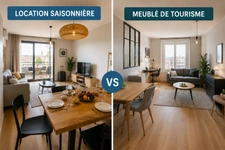
Since January 1, 2025 and the Le Meur law, seasonal rentals are now subject to the same DPE obligations as traditional rentals. For new tourist furnished rentals put on the market or subject to a change-of-use authorization, the property must have a DPE rated at least E since 2025. From 2034, all seasonal rental properties will have to display an energy class between A and D.
Checklist of landlord obligations regarding the DPE:
Completion of the DPE by a certified diagnostician before any rental Display of the energy and climate class in the rental advertisement Attachment of the DPE to the lease when signing Transmission of the full document to the tenant
What changes with the new DPE regulations in 2026?
The new calculation method and revised thresholds since January 1, 2026
Since January 1, 2026, the DPE calculation has evolved significantly thanks to the modification of the electricity conversion factor. The coefficient used to convert final energy into primary energy decreases from 2.3 to 1.9, in line with European standards. This change directly benefits electrically heated homes, which see their primary energy consumption decrease without renovation work. In practical terms, this reform may allow some properties previously classified F or G to rise above the critical threshold and reach class E or higher. Approximately 850,000 homes could thus leave the status of energy-inefficient properties, according to official estimates. The objective is clear: encourage electrification of heating and encourage owners to replace fossil fuel boilers with heat pumps or other efficient electric equipment. This evolution in calculation is part of the climate law framework and modifies the thresholds of energy labels on the reference scale. Landlords can therefore benefit from an improvement in their DPE without having carried out any work, which can change the situation for renting their property.
DPE validity: when should you redo your diagnosis?
The validity period of the DPE remains set at 10 years in principle. However, DPEs carried out before July 1, 2021 are no longer valid since the end of 2024 and must be redone. If your diagnosis dates from before this period, it is essential to renew it before any rental. Good news for owners: it is possible to update an existing DPE free of charge via the ADEME DPE-Audit Observatory, without a new visit from the diagnostician. This update is done online by entering the unique identification number of your DPE, visible at the top right of the document. You will then obtain an official certificate with the new energy label, which you can attach to the initial DPE. It is also recommended to redo your DPE after carrying out major energy renovation work (insulation, heating system change, window replacement). This approach allows you to enhance your property and display a better energy class in your rental advertisements, which can make it easier to find tenants and justify a higher rent.
What are the rental ban dates according to energy class?
The Climate and Resilience law has introduced a progressive schedule to combat energy-inefficient housing and improve the energy performance of the French rental housing stock. This system imposes increasingly strict restrictions on landlords, with specific deadlines depending on the property’s energy class. Here is what you need to know to remain compliant.
Ban on properties classified G since 2025
Since January 1, 2025, properties classified G on the DPE can no longer be rented in mainland France. This ban applies to all properties whose energy consumption exceeds 420 kWh/m²/year in primary energy or whose greenhouse gas emissions exceed 100 kg of CO2/m²/year. In practical terms, this means it is now impossible to sign a new lease for a property classified G. The ban also applies when renewing or tacitly renewing an existing lease. If you own a property classified G, you must carry out energy renovation work to improve its class before renting it again. Note that a first step had already been taken in 2023 with the ban on G+ properties consuming more than 450 kWh/m²/year in final energy, representing around 168,000 properties according to official figures.
Ban on properties classified F planned for 2028
From January 1, 2028, the rental ban will extend to properties classified F. These properties, whose energy consumption is between 330 and 420 kWh/m²/year, represent a significant part of the French rental housing stock. Owners of F-rated properties therefore still have a few years to plan and carry out the necessary work. However, it is strongly recommended to anticipate these renovations now, as timelines can be long and costs significant. In addition, since August 24, 2022, rents for F and G properties are frozen, which reduces rental profitability. The reform of the DPE calculation that came into force on January 1, 2026 may however allow some F-rated properties to move up to class E, especially electrically heated properties, thanks to the reduction of the electricity conversion coefficient from 2.3 to 1.9.
Ban on properties classified E by 2034
The schedule continues with the ban on properties classified E from January 1, 2034. This deadline may seem distant, but it concerns a considerable number of properties. Landlords therefore have every interest in starting to think now about the energy performance of their property portfolio. To avoid being unable to rent their property, it is essential to carry out a precise energy diagnosis and plan renovation work accordingly. Capifrance advisors can support you in this process and guide you towards qualified professionals to enhance your property.
Here is a summary table of ban dates according to energy class:
Year Energy class concerned Consumption threshold 2023 G+ (most energy-consuming) > 450 kWh/m²/year (final energy) 2025 G > 420 kWh/m²/year (primary energy) 2028 F 330 to 420 kWh/m²/year 2034 E 250 to 330 kWh/m²/year
What penalties apply in case of rental without DPE or prohibited property?
Tenant remedies in case of missing or incorrect DPE
In the absence of a DPE or in case of incorrect information, the tenant has several legal remedies. Since the DPE became legally enforceable in July 2021, the tenant can go to court to request cancellation of the lease, a rent reduction or damages. This strengthened legal value protects tenants against landlords who do not respect their obligations. The financial penalties provided are significant. The fine may reach 3,000 euros for an individual and up to 15,000 euros for a legal entity, particularly in the absence of a DPE in the rental advertisement. The judge may also order energy renovation work or suspend rent payments until compliance is achieved. The landlord’s liability may also be engaged if false information was communicated to the diagnostician. In this case, the owner is exposed to legal action and criminal penalties for fraud. The tenant can prove the error by having a counter-diagnosis carried out by a certified professional, which allows precise identification of discrepancies and demonstration of possible bad faith by the landlord.
What happens to an ongoing lease on a property classified G?
Existing leases can continue until their term without being automatically terminated. In practical terms, the owner can no longer increase the rent when renewing the lease, re-renting the property or even during the lease through annual revision. This measure aims to protect tenants living in energy-inefficient properties and encourage landlords to carry out energy renovations. If the tenant leaves the property, the landlord will not be able to sign a new lease with another tenant as long as the property remains classified G. The only solution is to carry out renovation work allowing the property to reach at least class F, and ideally class E to anticipate the ban scheduled for 2028.
How to improve the DPE of your property before renting?
The most effective energy renovation works
Before committing expenses, it is recommended to carry out an energy audit by a professional. This audit makes it possible to identify priority work, estimate performance gains and plan interventions in the correct order to optimize your investment. The most effective work to improve the DPE primarily concerns insulation of attics and walls, which significantly reduce heat loss. Replacing windows with efficient double glazing improves airtightness and comfort. Modernizing the heating system, particularly by installing a heat pump or replacing an obsolete boiler, can improve several energy classes. Finally, controlled mechanical ventilation (VMC) ensures efficient air renewal while limiting energy losses. These coordinated interventions can move a property from class G or F to an acceptable class for rental, while sustainably increasing the value of your real estate assets.
What financial aid for landlords in 2026?
To finance renovation work, several aid schemes are available to landlords in 2026. MaPrimeRénov’ remains the main state aid for energy renovation. It is open to landlords under income and rental commitment conditions. The amounts vary depending on the work and the energy gain achieved. Energy Savings Certificates (CEE) allow obtaining bonuses paid by energy suppliers to finance specific operations. The eco-interest-free loan offers interest-free financing for energy performance improvement work. The ecological transition agency (ADEME) and the National Housing Agency (Anah) also offer additional aid for landlords who commit to renting their property at controlled rents. The remaining cost can therefore be significantly reduced by combining these different schemes. Capifrance real estate advisors can guide you towards certified professionals and support you in preparing your aid application to enhance your property and make it compliant with 2026 requirements.
What differences between the DPE for sale and for rental?
The energy performance diagnosis is mandatory in both cases, but its practical consequences differ significantly depending on your real estate project. In the case of a sale, the DPE informs the future buyer about energy consumption and can directly influence the negotiation price. A property classified F or G will often suffer a price reduction, while an efficient property (A, B or C) gains value. Since April 2023, an additional energy audit has been mandatory for properties classified F or G put up for sale. This audit details possible renovation scenarios and helps the buyer estimate the investments needed to improve the property’s performance. In the case of rental, the DPE directly determines the right to rent. Properties classified G have been banned from rental since January 2025, F properties will be banned in 2028, and E properties in 2034. A landlord can therefore no longer sign a new lease or renew an existing contract for a non-compliant property. This major difference turns the DPE into a real regulatory compliance criterion for rental. Another important change: blank DPEs are no longer accepted since the July 2021 reform. All diagnoses must now display a precise energy and climate class. The DPE has also had legally enforceable value since 2021, which means that a tenant or buyer can hold the owner liable in case of significant error in the diagnosis.
Frequently asked questions about the DPE for rental
What class is required to rent a property in 2026?
In 2026, at least class E is required to rent a property legally. Properties classified G have been banned from rental since January 1, 2025, and the ban will extend to F-rated properties from January 1, 2028. E-rated properties will in turn be banned in 2034. The good news is that the new DPE calculation that came into force on January 1, 2026 may improve your energy class without renovation work, particularly for electrically heated properties, thanks to the reduction of the conversion coefficient from 2.3 to 1.9.
How long is a DPE valid for rental or sale?
The DPE validity period is 10 years from its completion, whether for rental or sale. However, DPEs carried out before July 1, 2021 are no longer valid and must be redone because they do not comply with the new legally enforceable calculation method. If you have recently carried out a DPE, you may benefit from a free update in 2026 via the ADEME DPE-Audit Observatory if the new calculation improves your rating, without a new visit from the diagnostician.
Where can you find the DPE of your property?
You can find your property’s DPE on the ADEME DPE-Audit Observatory using the unique identification number indicated on your diagnosis. Each DPE now includes a QR code that allows you to verify its validity and authenticity online. This official platform also allows you to download a new label certificate if your property benefits from the 2026 reform. You can also consult the DPE in the technical diagnostics file that the seller or landlord must provide during the real estate transaction.
Is a DPE carried out before 2021 still valid?
No, DPEs carried out before July 1, 2021 are no longer valid. The DPE reform that came into force on that date significantly changed the calculation method and made the diagnosis legally enforceable. If your DPE dates from before this period, you must redo it before any rental or sale. This new version of the DPE is more reliable and takes into account both energy consumption and greenhouse gas emissions to establish the property classification.
How much does a DPE cost for rental?
The price of the DPE is not regulated and generally varies between 100 and 250 euros depending on several factors. The property surface area, geographical location, type of property (house or apartment) and equipment influence the final price. To get the best price, request several quotes from certified diagnosticians and check their certification. Capifrance advisors can guide you towards trusted professionals to carry out your DPE under the best conditions and comply with your legal obligations as a landlord.
Author :

Frédéric Rémy – Director of Commercial Performance
A real estate professional for several years within the Capifrance network, I would like to share with you some essential advice to help you succeed in your real estate project with the support of our advisors.