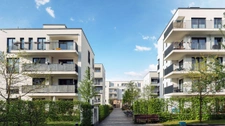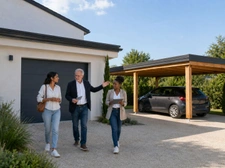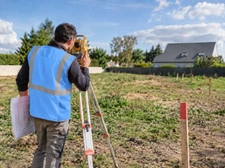







Are you planning construction or extension work? The development tax is an essential local tax that can amount to several thousand euros. This tax helps finance public facilities linked to new developments, such as roads, schools, and transportation infrastructure.
Learn how to calculate the amount of your tax, which exemptions are available, and how to anticipate this cost for your swimming pool, garden shed, or garage. We also guide you through the administrative procedures and introduce the online simulator available to estimate your tax.
Summary
- The development tax is a local tax payable when carrying out work subject to planning permission: construction, extension, reconstruction, development, or change of use of a property.
- Its amount depends on the taxable area, the annual fixed value per square meter, and the rates set by the municipality, the department, and, in the Île-de-France region, the regional authority.
- Certain developments such as swimming pools, garages, garden sheds, verandas, carports, or parking spaces follow specific rules, with fixed values or taxation calculated per square meter.
- Exemptions, allowances, and official simulators make it possible to estimate the cost of the tax in advance, particularly for small areas, primary residences, certain social housing projects, or developments benefiting from a local authority resolution.
What Is the Development Tax in 2026?
The development tax is a local tax collected by the municipality, the department, and, in Île-de-France, also by the regional authority. Its main purpose is to finance public infrastructure necessary for urban development, including roads, schools, public transportation, and community facilities. This tax is due when carrying out construction, reconstruction, extension, development, or change-of-use projects.
Who Is Subject to This Planning Tax?
Any individual or business undertaking work requiring planning permission is liable for the development tax. You are concerned if your project requires a building permit, a development permit, or a prior declaration of works. This tax applies as soon as you create an enclosed and covered floor area exceeding 5 m² with a ceiling height of at least 1.80 meters.
Construction, Extension, and Change of Use: When Is It Due?
The development tax is triggered in several situations. Even unauthorized works or works carried out in violation of planning regulations remain subject to taxation. Specific developments such as swimming pools, garden sheds, and outdoor parking spaces also fall within its scope.
How Is the Development Tax Calculated?
Which Taxable Area Is Taken into Account?
The taxable area corresponds to any newly created enclosed and covered floor space exceeding 5 m² and having a ceiling height equal to or greater than 1.80 meters. This definition also includes attics and basements, provided they meet these criteria. Garden sheds are subject to the tax if they are enclosed and covered. Uncovered terraces and pergolas open to the outside are excluded.
The taxable area forms the basis of the calculation. It directly determines the amount you will have to pay for your construction or extension project.
Applicable Municipal, Departmental, and Regional Rates
The amount of the development tax is based on rates voted by local authorities. The municipal share ranges from 1% to 5%, with the possibility of increasing it up to 20% in certain sectors, particularly where significant public infrastructure must be created.
The departmental share is uniform throughout the department and may not exceed 2.5%. In Île-de-France, a regional share is added, with a rate capped at 1%.
These rates apply to the fixed value per square meter, which is updated annually by INSEE according to the construction cost index. For 2026, this value is €892 per m² outside Île-de-France and €1,011 per m² within Île-de-France.
Below is a summary table of the values and rates applicable in 2026:
Element | Outside Île-de-France | Île-de-France |
|---|---|---|
Fixed value per m² | €892 | €1,011 |
Municipal rate | 1% to 5% (up to 20% in certain sectors) | 1% to 5% (up to 20% in certain sectors) |
Departmental rate | Up to 2.5% | Up to 2.5% |
Regional rate | Not applicable | Up to 1% |
Example Calculation for a New House
To illustrate the calculation, let us consider a new 120 m² house located outside Île-de-France in a municipality applying a municipal rate of 3% and a departmental rate of 2%.
The calculation formula is:
Taxable area × Fixed value per m² × Local authority rate
Municipal share: 120 m² × €892 × 3% = €3,211.20
Departmental share: 120 m² × €892 × 2% = €2,140.80
The total development tax for this project therefore amounts to €5,352. This amount may vary depending on locally approved rates and the property's location. To obtain an accurate estimate for your project, use the simulator available on impots.gouv.fr or consult a Capifrance advisor.
What Is the Tax Amount for a Swimming Pool, Garden Shed, or Garage?
The following developments are not subject to the standard calculation based on floor area. They follow specific fixed values or particular rules that you should know in order to anticipate the applicable tax.
Swimming Pools and Outdoor Parking Spaces
For swimming pools, the development tax is calculated using a fixed value of €251 per m² of pool area in 2026. This value is added to any other taxable elements of your project, even though the pool itself is not included in the floor area. The calculation is then multiplied by the local rates.
Outdoor parking spaces also follow a fixed-rate schedule. In 2026, each parking space is taxed at €2,928 per space. This amount can reach €5,857 following a local authority resolution in certain municipalities. This rule applies to outdoor parking lots or partially enclosed parking spaces, whether marked or not.
Garden Shed, Greenhouse, and Pergola
A garden shed or greenhouse becomes subject to the tax once its area exceeds 5 m² and it constitutes an enclosed and covered structure with a ceiling height of at least 1.80 meters. For these annexes, the standard formula applies:
Taxable area × Annual value per m² × Local rate
However, non-professional garden sheds and greenhouses with an area of 20 m² or less may benefit from an optional exemption, subject to a local authority decision.
Pergolas and terraces follow a clear rule: an open pergola and an uncovered terrace do not create taxable floor area. Conversely, an enclosed or covered pergola may be subject to the tax if it meets the criteria for enclosed and covered space.
Garage, Carport, Veranda, and Terrace
An enclosed and covered garage forms part of the standard taxable area. It is therefore subject to the standard calculation per square meter of floor space, according to the 2026 values (€892 outside Île-de-France and €1,011 within Île-de-France).
A carport has a particular status: if it is not fully enclosed, it may be considered an outdoor parking area and taxed according to the fixed value per parking space. If enclosed, it becomes a taxable construction based on floor area.
A veranda creates taxable floor space as soon as it is enclosed, covered, and exceeds 5 m². It therefore follows the standard calculation.
Specific rules also apply to caravans, mobile leisure homes, and camping pitches, with fixed values per pitch.
Type of Installation | Fixed Amount 2026 |
Swimming pool | €251 per m² of pool area |
Outdoor parking space | €2,928 per space (up to €5,857 by local resolution) |
Ground-mounted photovoltaic panel | Specific fixed value depending on surface area |
Wind turbine | Fixed value per unit |
What Exemptions Exist for the Development Tax?
Certain constructions and developments may benefit from exemptions or allowances that reduce the amount of development tax payable.
Automatic Exemptions
Certain exemptions apply automatically, without requiring a local authority decision:
- Constructions with an area of 5 m² or less
- Reconstruction of a building destroyed by a disaster (fire, natural disaster) within 10 years of the event
- Constructions covered by a natural, technological, or mining risk prevention plan
- Buildings used for public services or public utility purposes
- Industrial or agricultural buildings
Allowances for Primary Residences and Social Housing
A 50% allowance applies to the first square meters of your primary residence and its annexes. Specifically, this allowance applies to the first 100 m² of a dwelling and its annexes used as a primary residence. For housing financed through a zero-interest loan (PTZ), the allowance may extend to 50% of the area exceeding the first 100 m².
Local authorities may also approve optional exemptions for certain projects. Garden sheds, greenhouses, and dovecotes with a surface area of 20 m² or less may therefore be exempted through a local resolution. Social housing and social accommodation may benefit from specific exemptions depending on municipal or departmental decisions.
Buildings listed or registered as historic monuments are also eligible for optional exemptions. Finally, local authorities may approve exemptions based on environmental regulations or natural conservation objectives in order to encourage environmentally friendly construction projects.
How Do You Declare and Pay the Development Tax?
How Can You Check, Declare, or Retrieve Information About Your Development Tax?
To declare your development tax, you must use your secure account on impots.gouv.fr under the “Manage My Real Estate Properties” section. Declaration deadlines vary according to the size of your project.
For constructions with a floor area of less than 5,000 m², you have 90 days after completion of the work. If your project reaches or exceeds 5,000 m², the deadline is seven months after the planning permission has been granted.
You may also use paper form No. 6840-SD, available on the tax administration website. If you have never received a tax notice despite the completion of your works, check your online account or contact your local tax office directly.
When and How Do You Pay the Development Tax?
The payment schedule depends on the total amount due.
If the amount is less than €1,500, you will receive a single payment request 90 days after completion of the works.
If the amount is €1,500 or more, the tax is paid in two installments. The first payment is due 90 days after completion of the works, and the second six months later. These installments are deducted from the final amount calculated by the administration.
Payment is made directly online through your impots.gouv.fr account or by any other payment method specified on your tax notice. Please note that a preventive archaeology tax may also apply if your works affect the subsoil. It is calculated on the same basis and follows the same payment procedures.
Using the Simulator to Estimate Your Tax
Before starting your project, it is strongly recommended to use the free development tax simulator available on impots.gouv.fr. This tool provides an indicative estimate of the amount payable, taking into account the taxable area, your location (inside or outside Île-de-France), and any specific developments such as a swimming pool or parking spaces.
The simulator also includes the preventive archaeology tax calculation, giving you a comprehensive view of your project's tax cost. You can also consult taxe-amenagement.fr for additional information. This estimate helps you better prepare your budget and anticipate payment deadlines.
Development Tax, Commercial Premises, and Business Assets: What You Need to Know in 2026
The development tax does not only apply to residential projects. It may also apply to business premises, commercial premises, warehouses, offices, and buildings used for artisanal, professional, or commercial activities whenever the project creates taxable floor space or changes the use of a property requiring planning permission.
An entrepreneur, retailer, or investor may therefore be affected when constructing a business premises, extending an existing building, creating storage space, fitting out offices, or converting a property for a new activity. A change of use, such as converting a residential property into a commercial premises or a business premises into residential accommodation, may also trigger the tax if works requiring authorization are carried out.
For a business asset (fonds de commerce), the development tax does not apply directly to the commercial activity itself or to the value of the business. It applies to the premises where the activity is carried out when works create taxable floor space or modify the building's characteristics.
Before purchasing, renting, or converting commercial premises, it is therefore essential to study the applicable planning regulations, the Local Urban Development Plan (PLU), the required authorizations, and the estimated development tax amount.
For professionals and investors, the analysis must also consider the profitability of the project. A high development tax may affect the financial balance of a commercial operation, particularly when combined with compliance works, accessibility upgrades, fire safety improvements, or changes of use.
Capifrance Supports Your Real Estate Project
The development tax is a significant cost that should be anticipated in any construction or real estate acquisition project. It helps finance essential public infrastructure such as roads, schools, and transportation networks required for the development of your municipality.
To estimate your property, prepare your purchase or sale project, and anticipate all associated costs, Capifrance real estate advisors provide personalized local support. You can also benefit from our free online property valuation service to discover the value of your property in just a few clicks.
Contact a Capifrance advisor near you today for tailored support adapted to your real estate project.
Conclusion
The development tax is a cost that must be anticipated from the outset of any real estate project, whether it involves a house, an extension, a swimming pool, a garage, commercial premises, or a change of use. Its amount depends on many factors: taxable area, location, local rates, the nature of the development, available exemptions, and the specific rules applicable in each municipality.
Before submitting a prior declaration or a building permit application, it is advisable to run a simulation, check local rates, and seek information from the planning department or tax office. This approach helps create a more realistic budget and better control the overall project cost.
For any real estate sale, purchase, rental, or investment project, whether residential or commercial, a Capifrance real estate advisor can support you every step of the way. Thanks to their knowledge of the local market and the specific characteristics of your area, they can help you estimate a property, analyze an opportunity, prepare a transaction, and secure your project under the best possible conditions.
FAQ on the Development Tax
Is the Development Tax Payable Every Year?
No. The development tax is payable only once, when planning permission is granted. Unlike property tax, which is an annual recurring tax based on the property's cadastral value, the development tax is a one-off charge linked exclusively to your construction, extension, or development project.
What Should You Do If You Never Received Your Development Tax Notice?
If you have never received your development tax notice, first check your secure account on impots.gouv.fr under the “Manage My Real Estate Properties” section. The notice may arrive several months after planning permission is granted. If nothing appears online and the delay seems unusually long, contact your local public finance office directly.
How Can You Challenge the Development Tax?
You may challenge the development tax if you believe the amount is incorrect or unjustified. The first step is to submit a prior claim to the public finance administration within two months of receiving the notice. This step is mandatory before any legal appeal. If your claim is rejected or remains unanswered, you then have two months to bring the matter before the competent administrative court.
Can You Obtain a Refund of the Development Tax?
Yes, a refund is possible in certain specific situations. If you abandon your project before the works are completed, you must inform the municipality, which will issue a cancellation order to be sent to the tax authorities. A refund may also be granted in the event of a significant reduction in taxable area or a calculation error.
What Is the Difference Between Development Tax and Property Tax?
The development tax is a one-off local tax collected by local authorities (municipality, department, and region in Île-de-France) when construction or development works are carried out. It finances public facilities related to the project.
Property tax, by contrast, is an annual recurring tax on property ownership, calculated according to the property's cadastral value. The development tax is paid only once, while property tax is due every year.
How Is the Development Tax Recorded in Accounting?
For a company, the development tax is generally recorded as an operating expense under the account “Other Local Taxes” (account 63513) when the works are carried out. Depending on the nature of the activity and the project, it may also be capitalized and included in the construction cost of the property.
The construction cost index published by INSEE determines the annual values per square meter. Consult your accountant to adapt the accounting treatment to your specific situation.
Author :

Frédéric Rémy – Director of Commercial Performance
A real estate professional for several years within the Capifrance network, I would like to share with you some essential advice to help you succeed in your real estate project with the support of our advisors.