






Before starting an extension, installing a fence, or renovating your façade, you will likely need to submit a prior declaration of works. This planning permission is essential for many projects involving your property. This guide explains when it applies, which forms to complete, how to proceed with your application, and the timelines and costs involved so you can carry out your project in full compliance. For any residential or commercial property project, contact your local Capifrance advisor and benefit from expert guidance!
Summary
- A prior declaration of works is a simplified planning authorization required for many small- and medium-scale projects: extensions, façade modifications, roofing work, fences, swimming pools, pergolas, carports, or energy-efficiency renovations visible from the outside.
- The declaration allows the local authority to verify that the project complies with the Local Urban Development Plan (PLU), local architectural regulations, and any restrictions related to protected areas or historic monuments.
- Choosing the correct Cerfa form, providing high-quality plans, and complying with the review period are essential to avoid a refusal, a request for additional documents, or delays in starting the work.
- After receiving the decision of non-opposition, you must display the authorization on the site, comply with the third-party appeal period, carry out the works according to the approved file, and submit a declaration confirming completion and compliance of the works.
What Is a Prior Declaration of Works and Why Declare Your Project in France?
Purpose of the Prior Declaration and Reasons for Filing It
A prior declaration of works, commonly referred to as a DP (Déclaration Préalable), is a simplified planning authorization required for certain small-scale projects. It allows the municipality to verify that your project complies with local planning regulations, particularly those set out in the Local Urban Development Plan (PLU) or the municipal planning map.
Why submit a prior declaration? Because it protects both the public interest and your project. By submitting your file to the local authority, you ensure that your work complies with applicable regulations, helping you avoid future penalties or demolition orders. A DP generally applies to projects that alter the exterior appearance of a property, create small additional floor areas, or involve outdoor developments.
Difference Between a Prior Declaration and a Building Permit
The main difference between these two authorizations lies in the scale of the planned work. A prior declaration applies to small projects such as extensions between 5 and 20 m² of footprint or floor area (this threshold may increase to 40 m² in urban areas covered by a PLU), façade modifications, fence installations, or modest outdoor developments.
A building permit becomes mandatory beyond these thresholds or for larger new constructions. The permit procedure is more complex and requires a more detailed file, sometimes including the involvement of an architect.
Regarding validity, a prior declaration remains valid for three years from the date of the decision of non-opposition. This period may be extended twice for one additional year each time, provided planning regulations have not changed in the meantime.
Which Projects Require a Prior Declaration?
Detached House: Extension, Roof, Windows, and Roof Windows
If you are planning work on your house, several types of projects require a prior declaration. An extension of less than 40 m² of footprint in an urban area covered by a PLU falls under this procedure, while the threshold is reduced to 20 m² in other areas. Be aware that if the project increases the total floor area of the building beyond 150 m², a building permit becomes mandatory, even for a modest extension.
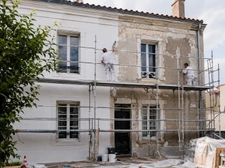
Roof modifications also require a prior declaration, whether involving a change of material or roof shape. Replacing windows or installing roof windows (Velux) that alter the exterior appearance of the building also falls within this framework. If your house is located in a protected area (near a historic monument or in a listed site), even a simple façade renovation requires this authorization.
To secure your project, a Capifrance real estate advisor can guide you through local planning regulations and verify compliance with the PLU.
Outdoor Developments: Fence, Gate, Swimming Pool, Pergola, and Carport
Outdoor developments account for a significant proportion of prior declarations submitted to local authorities. Building a fence or installing a gate that changes the appearance of your property from the public road requires this procedure, especially in protected areas.
For an uncovered swimming pool, a prior declaration is required once the pool measures between 10 m² and 100 m². Beyond that, a building permit is required. A pergola or carport with a footprint between 5 and 20 m² also falls under the DP procedure. These structures modify land use and the visual appearance of your property, which justifies municipal oversight.
Type of Work | DP Threshold | Building Permit Threshold |
|---|---|---|
House extension (PLU area) | 5 to 40 m² | More than 40 m² |
House extension (outside PLU area) | 5 to 20 m² | More than 20 m² |
Uncovered swimming pool | 10 to 100 m² | More than 100 m² |
Pergola / Carport | 5 to 20 m² | More than 20 m² |
Energy Renovation: Solar Panels, Heat Pumps, External Insulation, and Roller Shutters
Energy-efficiency renovations are increasingly popular in 2026, but they are not exempt from administrative procedures. Installing solar panels on your roof requires a prior declaration because it alters the building’s external appearance. The same applies to heat pumps visible from the street, as their outdoor units may affect the façade’s appearance.
External thermal insulation (ETI) changes the appearance of the house and slightly increases its footprint, which justifies filing a DP. Similarly, replacing traditional shutters with roller shutters modifies the appearance of the façade and falls under these regulations.
Although environmentally friendly and encouraged by public authorities, these projects must comply with local planning regulations to preserve the architectural harmony of the neighborhood. A Capifrance advisor can assist you with these procedures and help enhance your property's value after energy renovations.
Which Cerfa Form Should You Use?
Cerfa 13703, Cerfa 16702, and Downloadable PDF Forms
To submit a prior declaration of works, you must choose the correct Cerfa form according to the nature of your project. Cerfa 13703 (version 13703*13 in 2026) applies to constructions and works not requiring a building permit on a detached house and its annexes. It covers most private projects: extensions, swimming pools, fences, façade renovations, or roof modifications.
Cerfa 16702 is used for construction and work on other types of buildings (apartment blocks, commercial premises, vacant land) as well as applications for changes of use without structural modifications. Finally, Cerfa 16703 applies to land development projects such as subdivisions and land divisions that do not require a development permit.
You can download these forms in PDF format directly from service-public.fr or via your municipality’s online planning portal. These versions are digitally fillable, making completion easier and reducing errors.
Required Documents: Site Plan and Mandatory Supporting Documents
The site location plan (DP1) allows the authorities to precisely locate your project within the municipality. The site layout plan (DP2) shows the buildings to be constructed or modified, while the cross-section plan (DP3) illustrates the profile of the land and construction. These three plans are required when the project creates or modifies a footprint or volume.
You must also provide façade and roof plans (DP4), a graphical insertion document showing how the project integrates into its surroundings, a descriptive note, and photographs showing the site within its immediate and wider environment.
In certain cases, additional documents are required. If your project is located in a protected area or near a historic monument, approval from the Architect of Historic Buildings will be necessary, together with a detailed statement describing the materials used and the planned construction methods.
How to Submit Your Declaration and Where to File It
Online Submission, Postal Mail, or In-Person Filing
Completing Cerfa form 13703 requires several key sections: identifying the applicant (name, address), describing the site (address, cadastral references), detailing the project, and specifying the areas created or modified. Every section must be completed carefully to avoid delays during the review process.
Once your file is complete, you have three submission options. Online filing through your municipality’s planning portal is now mandatory for legal entities in municipalities with more than 3,500 inhabitants. This option allows full digital submission. You may also send your declaration by registered mail with acknowledgment of receipt to the relevant town hall. Finally, you may submit it in person and receive a receipt confirming acceptance, including a registration number and filing date.
Number of Copies Required
The number of copies required depends on the submission method and the location of the project. Generally, you must provide two complete copies of the file (form and supporting documents) when submitting to the town hall. If the project is located in a protected area, near a historic monument, or within a listed site, additional copies may be required for referral to relevant authorities.
For online submissions, a single digital file is sufficient. The municipality will issue a registration number and receipt date marking the beginning of the review period. Keep this receipt carefully, as it serves as proof of submission and is used to calculate deadlines.
What Is the Review Period and What Happens After Approval?
Timeframe for Receiving a Response from the Municipality
Once your complete application has been submitted, the standard review period is one month. This may be extended to two months if your project is located in a protected area, such as near a historic monument, in a listed site, or within a natural park. The municipality will notify you of the applicable review period by registered mail within one month of submission.
At the end of the review period, you will either receive an express decision of non-opposition or benefit from tacit approval if no response has been issued. In both cases, the non-opposition decision authorizes you to begin the work. If your application is incomplete, the municipality has one month to request missing documents, which suspends the review period until the requested documents are received.
Displaying the Authorization and Declaring Completion of Works
As soon as you receive approval, you must display a rectangular sign measuring more than 80 cm on the site. It must remain visible from the public road throughout the duration of the works and include the nature of the project, registration number, authorization date, and appeal procedures.
Displaying the sign triggers a two-month third-party appeal period. Any neighbor or third party who believes the project adversely affects their interests may file an appeal before the administrative court during this period. Once the works are completed, you must submit a Declaration Confirming Completion and Compliance of Works (DAACT) to the municipality. The municipality then has three months (or five months in protected areas) to verify compliance.
Risks of Starting Work Before Approval
Starting work before receiving the decision of non-opposition constitutes a planning offense. You may face criminal and administrative penalties, including fines of several thousand euros depending on the area created, immediate suspension of the works, or even demolition of unauthorized structures.
Such sanctions may be imposed for up to six years after the completion of the works.
Checklist After Approval
- Display the required sign on the site (visible from the public road)
- Wait for the two-month third-party appeal period if desired
- Start the works in accordance with the authorization granted
- Keep the sign displayed throughout the duration of the project
- Submit the DAACT upon completion of the works
How Much Does a Prior Declaration Cost and What Assistance Is Available?
Architect Fees and Overall Application Costs
Submitting a prior declaration to the municipality is completely free of charge. However, indirect costs may arise depending on the complexity of your project. If the total floor area exceeds 150 m² after completion, hiring an architect becomes mandatory, and you must obtain a building permit rather than a simple DP.
For projects requiring a prior declaration, using an architect or drafting professional remains optional but is strongly recommended for technically complex files. Fees generally range between €500 and €2,500 depending on the scale of the project and the region.
In addition to professional fees, you should anticipate the development tax, calculated according to the area created and the rates set by the municipality, department, or region. In 2026, the standard value is approximately €886 per m² for main constructions and €251 per m² for swimming pools. You will receive a tax assessment notice in the months following approval.
Appealing or Modifying a Prior Declaration
If your prior declaration is refused, several appeal options are available. First, you may file an informal appeal with the mayor by registered mail within two months of receiving the refusal. This allows you to provide additional arguments or correct aspects of the file.
If the informal appeal is rejected, you may file a formal appeal before the administrative court within two months. Consulting a lawyer specializing in planning law is recommended, particularly if the refusal concerns interpretation of the PLU or provisions of the Planning Code.
If your project changes while the authorization remains valid, you may submit an amended prior declaration using Cerfa form 16700. This allows adjustments to plans, materials, or areas without resubmitting the entire original file. The amendment does not affect the validity period of the original authorization.
Prior Declaration for Commercial Premises: Which Rules Apply?
A prior declaration may also apply to commercial premises, offices, professional practices, workshops, or business premises. Whenever works alter the exterior appearance of the building, change its use, or create additional floor area, planning permission may be required before construction begins.
Common projects include modifying a storefront, replacing shop windows, installing or changing signage, converting premises into offices, creating retail areas, adding storage space, installing security grilles, modifying façades, or changing the use of a property. Depending on the scope of the project, a prior declaration may be sufficient, although a building permit becomes necessary if structural elements are affected or the façade undergoes major alterations.
For a change of use without structural modifications, a prior declaration is generally required. This applies, for example, when professional premises become residential housing, when a shop becomes an office, or when business premises change use in compliance with the PLU. However, if structural works, façade modifications, or volume alterations are involved, a building permit may be mandatory.
Premises open to the public must also comply with additional regulations. Shops, medical practices, restaurants, hair salons, and other public-access establishments may be subject to accessibility, fire safety, and interior layout requirements. These obligations do not always fall under the prior declaration procedure but must be reviewed before starting work.
Before filing your application, consult the municipal planning department to verify compliance with the PLU, parking requirements, façade regulations, and any rules concerning signage. In a condominium, you must also review the condominium regulations and obtain approval from the general meeting if common areas or the building's exterior appearance will be modified.
To secure a conversion, purchase, sale, or rental project involving commercial premises, guidance from a local real estate advisor can be invaluable. They can help assess the property's potential, identify administrative requirements, and ensure that the proposed works align with your real estate or business objectives.
Conclusion
A prior declaration of works is an essential step in securing many property projects before construction begins. Whether you are planning an extension, façade modification, outdoor installation, energy renovation, or work on commercial premises, this authorization ensures compliance with applicable planning regulations.
Before starting work, it is essential to identify the correct Cerfa form, prepare a complete application file, comply with review deadlines, and wait for the municipality's decision of non-opposition. Displaying the authorization on the site and submitting the completion declaration must also be anticipated to avoid disputes or challenges.
For projects involving a house, apartment, plot of land, commercial property, or business premises, support from a Capifrance real estate advisor can help you better understand local constraints, enhance your property's value, and secure your sales, purchase, rental, or investment project. Consider requesting a property valuation before and after the works to assess the impact of your project on your property's value.
Frequently Asked Questions About Prior Declarations of Works
Where Can I Find Prior Declaration Forms?
Prior declaration forms are available free of charge through several official channels. You can download updated Cerfa forms (including Cerfa 13703 and Cerfa 16702) from service-public.fr. Your municipality's online planning portal also provides these forms, often accompanied by guidance notes tailored to local regulations. You may also visit the town hall directly to obtain paper copies and advice from the planning department regarding supporting documents.
How Long Do I Have to Complete the Works After Obtaining a Prior Declaration?
Once your prior declaration has been approved, you have three years to start the works. This period begins on the date of the decision of non-opposition or tacit approval. If you cannot begin within this timeframe, you may request two one-year extensions, provided planning regulations have not changed unfavorably. If the works do not begin within the validity period, the authorization expires and a new application must be submitted.
Is a Prior Declaration Required for a Garden Shed?
Yes, a garden shed requires a prior declaration if its footprint is between 5 and 20 m². Below 5 m², no planning authorization is required except in certain protected areas. Above 20 m² of footprint or floor area, a building permit becomes mandatory. In all cases, consult your municipality’s PLU to verify specific regulations concerning materials, height, and placement relative to property boundaries.
What Procedures Apply to a Change of Use or Commercial Premises?
A change of use of commercial premises always requires planning authorization, even when no works are involved. If the change of use includes structural or façade modifications, a building permit is mandatory. If no structural changes are planned, a prior declaration is generally sufficient. You must use the appropriate form and verify compatibility with the PLU. Additional authorizations may also be required depending on the intended use, particularly regarding safety and accessibility regulations.
How Can I Retrieve an Old Prior Declaration File?
To retrieve an old prior declaration file, contact the planning department of the municipality where it was submitted. Planning archives can generally be consulted free of charge by anyone upon request. You may also request a copy of the complete file, although reproduction fees may apply. If the declaration was submitted recently through a digital platform, some municipalities provide online access via their planning portal. Bring the property address and, if possible, the registration number of the file to facilitate the search.
Author :

Frédéric Rémy – Director of Commercial Performance
A real estate professional for several years within the Capifrance network, I would like to share with you some essential advice to help you succeed in your real estate project with the support of our advisors.