







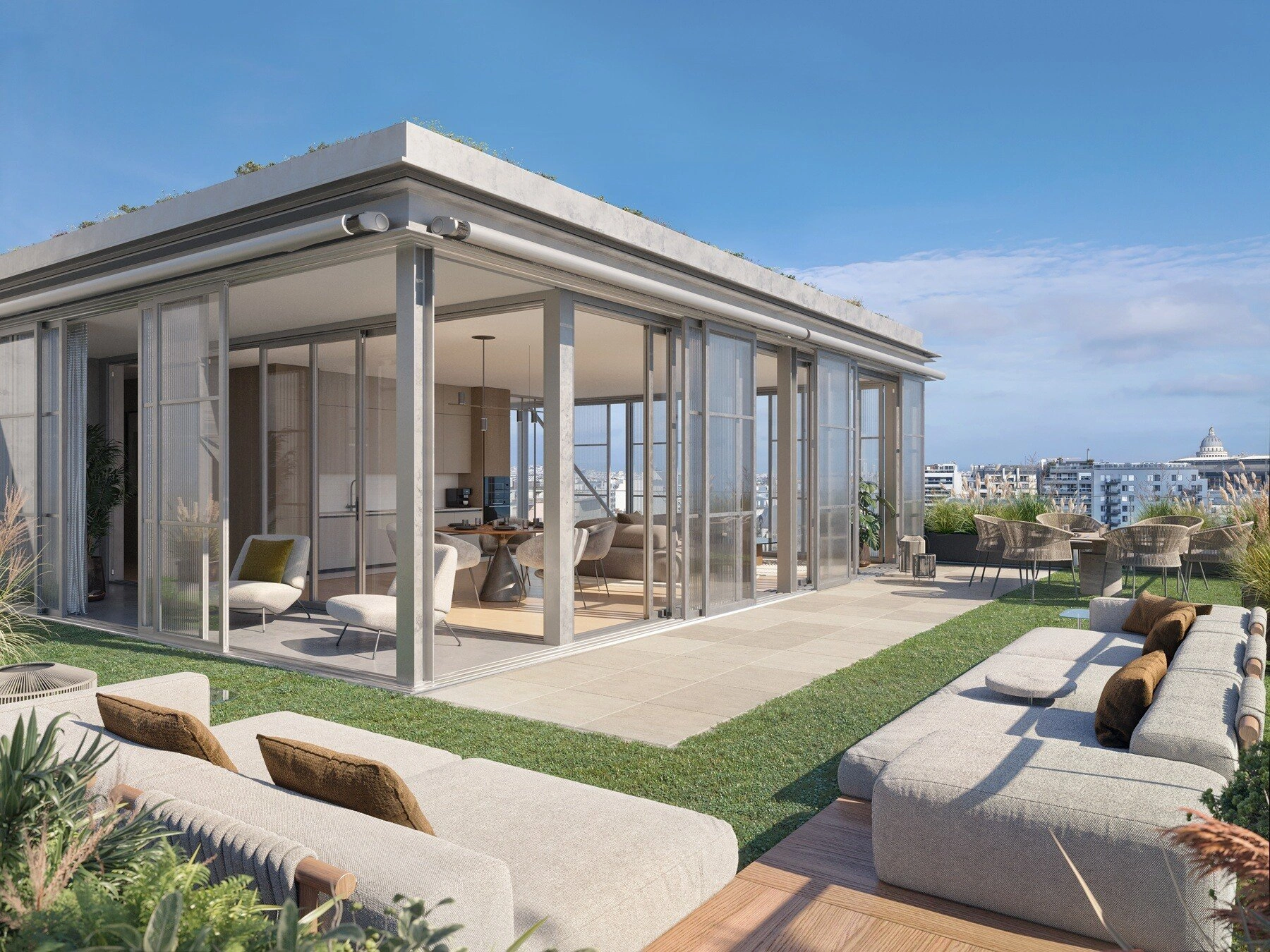
New real estate development of 60 units in Paris (75014)
Description of this new development in Paris
Un nouveau lieu de vie au cœur du quartier Saint-Vincent-de-Paul, rue Boissonade.
Au nord du 14ᵉ arrondissement, le quartier de Saint-Vincent-de-Paul se transforme pour inventer une nouvelle manière d’habiter Paris. Un lieu rare, à l’écart de l’agitation urbaine, où le calme, la lumière et la nature s’invitent au quotidien, en plein cœur de la ville.
Proche du Jardin du Luxembourg et du métro Raspail, Quartus Résidentiel, accompagné des architectes Lacaton & Vassal, réhabilite l’ancienne maternité Lelong pour lui offrir une nouvelle vie. Fidèle à l’histoire du site, le projet s’inscrit dans une longue tradition d’accueil, de bienveillance et d’attention portée aux usages.
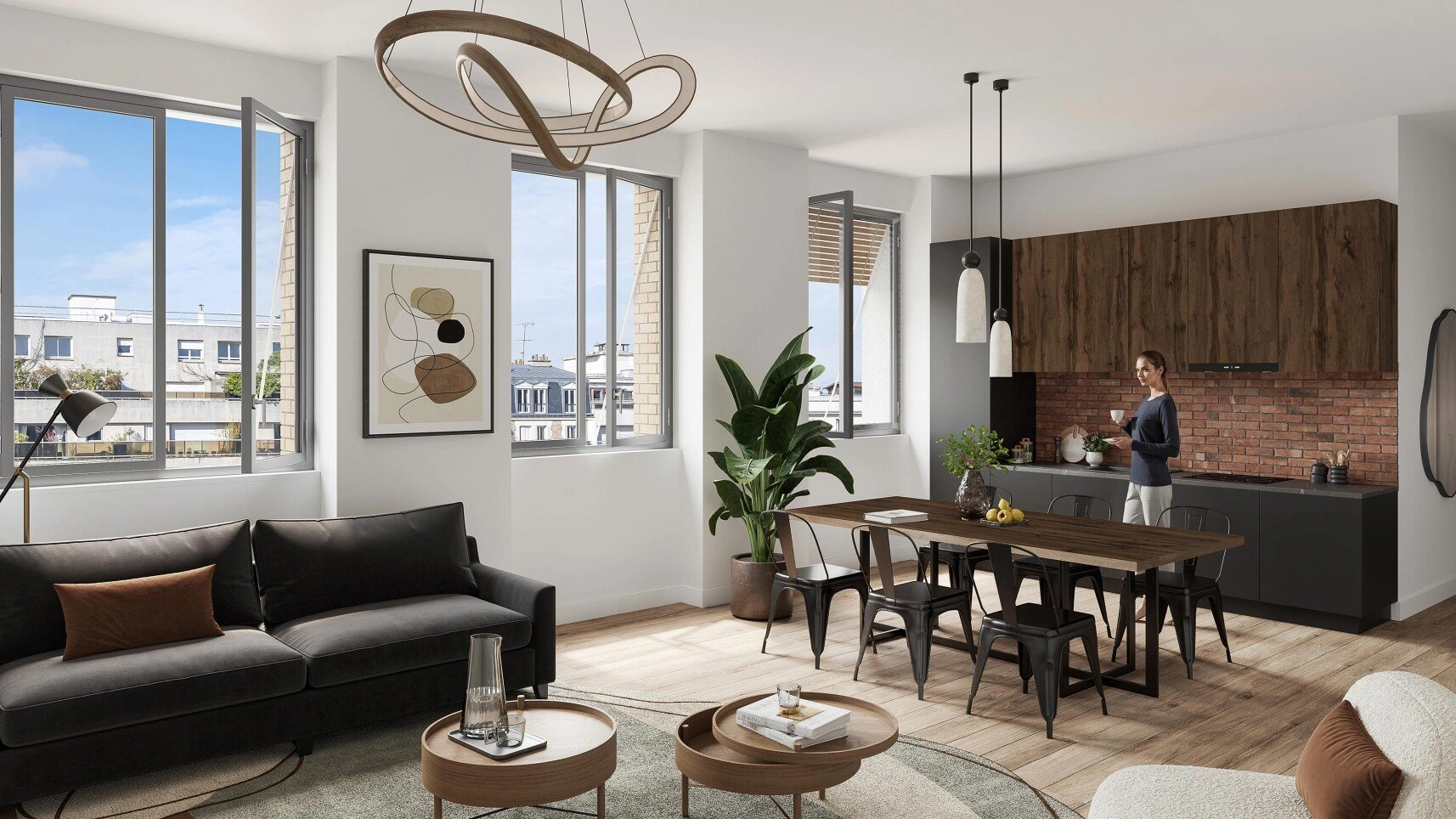
Le programme propose 82 logements, du studio au 5 pièces, conçus pour offrir des espaces généreux, lumineux et évolutifs. Chaque appartement bénéficie d’un soin particulier apporté à la qualité des volumes, à la lumière naturelle et aux vues, dans une architecture qui privilégie la liberté d’usage et le confort de vie.
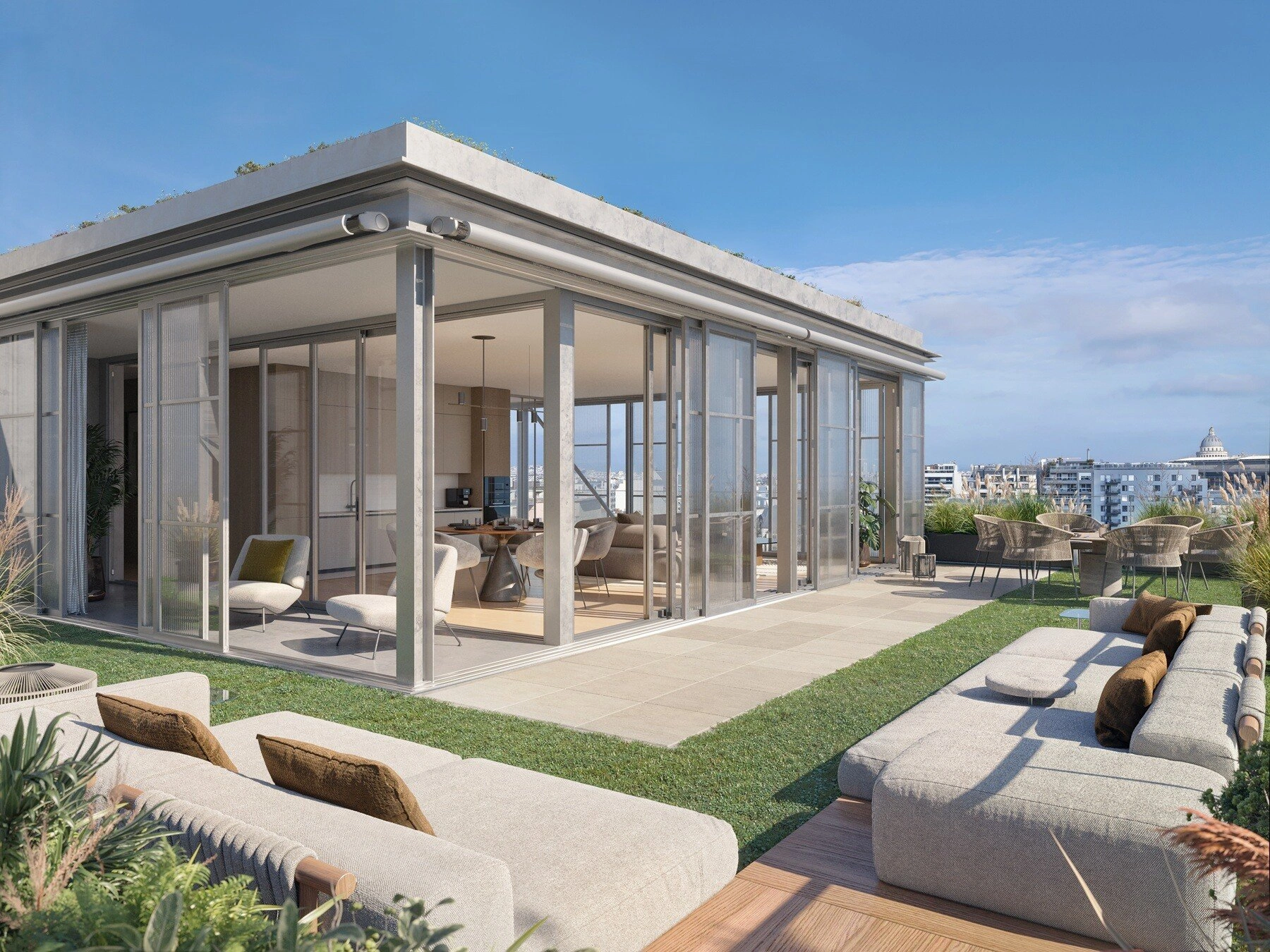
La surélévation contemporaine, légère et transparente, accueille des logements prolongés par de véritables espaces extérieurs : jardins d’hiver, balcons ou terrasses. Ces prolongements offrent une relation privilégiée avec le ciel et le paysage, et permettent de vivre dedans-dehors au fil des saisons, dans un cadre rare à Paris.
Pensé comme un village urbain, le projet favorise les rencontres et le vivre-ensemble. Les espaces communs constituent le cœur vivant de la résidence, des lieux de partage où chacun est libre de participer ou simplement de profiter d’un environnement apaisé et convivial.
Porté par une ambition environnementale forte, le projet valorise la réhabilitation du bâtiment existant, le réemploi des matériaux et des performances énergétiques élevées, tout en encourageant les mobilités douces et une gestion responsable des ressources.
Ancienne maternité, le site de Saint-Vincent-de-Paul connaît aujourd’hui une nouvelle renaissance.
Une invitation à habiter Paris autrement : plus librement, plus durablement, plus humainement.
64 lots d'habitations disponibles
-
PriceSurface areaCharacteristics
-
Apartment 26m2Floor : 5490 000€
-
490 000€26m2Floor : 5
-
Apartment 26m2Floor : 6500 000€
-
500 000€26m2Floor : 6
-
Apartment 33m2Floor : 4550 000€
-
550 000€33m2Floor : 4
-
Apartment 33m2Floor : 4550 000€
-
550 000€33m2Floor : 4
-
Apartment 33m2Floor : 4560 000€
-
560 000€33m2Floor : 4
-
Apartment 33m2Floor : 5570 000€
-
570 000€33m2Floor : 5
-
Apartment 33m2Floor : 5570 000€
-
570 000€33m2Floor : 5
-
Apartment 33m2Floor : 5580 000€
-
580 000€33m2Floor : 5
-
Apartment 33m2Floor : 6580 000€
-
580 000€33m2Floor : 6
-
Apartment 33m2Floor : 6590 000€
-
590 000€33m2Floor : 6
-
PriceSurface areaCharacteristics
-
Apartment 36m2Floor : 0470 000€
-
470 000€36m2Floor : 0
-
Apartment 49m2Floor : 1685 000€
-
685 000€49m2Floor : 1
-
Apartment 49m2Floor : 2695 000€
-
695 000€49m2Floor : 2
-
Apartment 50m2Floor : 1695 000€
-
695 000€50m2Floor : 1
-
Apartment 50m2Floor : 3700 000€
-
700 000€50m2Floor : 3
-
Apartment 50m2Floor : 2700 000€
-
700 000€50m2Floor : 2
-
Apartment 49m2Floor : 3700 000€
-
700 000€49m2Floor : 3
-
Apartment 46m2Floor : 5770 000€
-
770 000€46m2Floor : 5
-
Apartment 46m2Floor : 6780 000€
-
780 000€46m2Floor : 6
-
Apartment 49m2Floor : 4840 000€
-
840 000€49m2Floor : 4
-
Apartment 49m2Floor : 5870 000€
-
870 000€49m2Floor : 5
-
Apartment 49m2Floor : 6880 000€
-
880 000€49m2Floor : 6
-
Apartment 50m2Floor : 4880 000€
-
880 000€50m2Floor : 4
-
Apartment 51m2Floor : 4890 000€
-
890 000€51m2Floor : 4
-
Apartment 52m2Floor : 4930 000€
-
930 000€52m2Floor : 4
-
Apartment 55m2Floor : 4960 000€
-
960 000€55m2Floor : 4
-
Apartment 53m2Floor : 71 010 000€
-
1 010 000€53m2Floor : 7
-
Apartment 55m2Floor : 51 010 000€
-
1 010 000€55m2Floor : 5
-
Apartment 54m2Floor : 61 020 000€
-
1 020 000€54m2Floor : 6
-
Apartment 56m2Floor : 51 040 000€
-
1 040 000€56m2Floor : 5
-
PriceSurface areaCharacteristics
-
Apartment 69m2Floor : 1950 000€
-
950 000€69m2Floor : 1
-
Apartment 69m2Floor : 2960 000€
-
960 000€69m2Floor : 2
-
Apartment 69m2Floor : 3970 000€
-
970 000€69m2Floor : 3
-
Apartment 60m2Floor : 41 040 000€
-
1 040 000€60m2Floor : 4
-
Apartment 74m2Floor : 21 045 000€
-
1 045 000€74m2Floor : 2
-
Apartment 74m2Floor : 31 055 000€
-
1 055 000€74m2Floor : 3
-
Apartment 63m2Floor : 61 130 000€
-
1 130 000€63m2Floor : 6
-
Apartment 76m2Floor : 41 170 000€
-
1 170 000€76m2Floor : 4
-
Apartment 69m2Floor : 51 210 000€
-
1 210 000€69m2Floor : 5
-
Apartment 66m2Floor : 61 230 000€
-
1 230 000€66m2Floor : 6
-
Apartment 69m2Floor : 61 230 000€
-
1 230 000€69m2Floor : 6
-
Apartment 76m2Floor : 41 250 000€
-
1 250 000€76m2Floor : 4
-
Apartment 76m2Floor : 51 280 000€
-
1 280 000€76m2Floor : 5
-
Apartment 76m2Floor : 41 290 000€
-
1 290 000€76m2Floor : 4
-
Apartment 77m2Floor : 41 320 000€
-
1 320 000€77m2Floor : 4
-
Apartment 76m2Floor : 51 330 000€
-
1 330 000€76m2Floor : 5
-
Apartment 76m2Floor : 61 350 000€
-
1 350 000€76m2Floor : 6
-
Apartment 77m2Floor : 51 350 000€
-
1 350 000€77m2Floor : 5
-
PriceSurface areaCharacteristics
-
Apartment 100m2Floor : 21 345 000€
-
1 345 000€100m2Floor : 2
-
Apartment 100m2Floor : 31 360 000€
-
1 360 000€100m2Floor : 3
-
Apartment 85m2Floor : 41 490 000€
-
1 490 000€85m2Floor : 4
-
Apartment 90m2Floor : 41 590 000€
-
1 590 000€90m2Floor : 4
-
Apartment 95m2Floor : 41 630 000€
-
1 630 000€95m2Floor : 4
-
Apartment 90m2Floor : 51 640 000€
-
1 640 000€90m2Floor : 5
-
PriceSurface areaCharacteristics
-
Apartment 107m2Floor : 21 425 000€
-
1 425 000€107m2Floor : 2
-
Apartment 107m2Floor : 31 435 000€
-
1 435 000€107m2Floor : 3
-
Apartment 97m2Floor : 41 640 000€
-
1 640 000€97m2Floor : 4
-
Apartment 97m2Floor : 51 690 000€
-
1 690 000€97m2Floor : 5
-
Apartment 97m2Floor : 61 720 000€
-
1 720 000€97m2Floor : 6
-
Apartment 103m2Floor : 41 770 000€
-
1 770 000€103m2Floor : 4
-
Apartment 103m2Floor : 51 830 000€
-
1 830 000€103m2Floor : 5
-
Apartment 103m2Floor : 61 870 000€
-
1 870 000€103m2Floor : 6
-
Apartment 118m2Floor : 72 140 000€
-
2 140 000€118m2Floor : 7
-
Apartment 124m2Floor : 52 240 000€
-
2 240 000€124m2Floor : 5
Are you interested in this property? Contact us !


Legal guarantees: Financial completion guarantee, apparent defects guarantee, perfect completion guarantee, two-year guarantee, and ten-year guarantee.
Energy performance: RT2012 and RE2020
Accessibility to housing: disability standards, elevator, etc.
Standards: thermal, acoustic, etc.
A customizable home: modification works (bathtub, electrical outlet) and/or interior fittings such as tiling, painting, bathroom furniture, etc.
Reduced notary fees: approximately 3% vs. 7 to 8% for older properties
State aid: Zero-interest loan, Pinel scheme, etc.
Total or partial exemption from property tax: for the two years following the construction
Reduced VAT: Possibility of buying properties in ANRU zones and benefiting from a 5.5% VAT under certain income conditions.
First-time homebuyers can benefit from the zero-interest loan (PTZ) under certain income conditions.
First-time homebuyers refer to households that have not owned their primary residence in the two years preceding the loan offer and whose income does not exceed the established ceiling.
The assessment of income is based on the reference taxable income from the year N-2 of all the individuals intended to occupy the property.
The amounts of the PTZ and the income limits vary depending on the location of the property (Zone A, B, or C).
Searching for a property that meets your needs (get assistance from a specialized advisor from Capifrance)
Signing a reservation contract detailing the property (size, location, description), price, delivery date, etc. The buyer pays a deposit to the developer into an escrow account.
Financing the purchase with a loan and signing the loan offer
Signing the deed of sale at the notary's office, including all information about the property, the price and payment terms, the delivery date, and the guarantees.
Customizing the property and selecting materials in agreement with the developer (modification works).
Delivery of the property, allowing for the identification of any defects, which are addressed within a month following delivery by the companies involved in the construction.
RE2020 is the new energy and environmental regulation for all new construction. The developer commits to a certain level of building energy consumption and greenhouse gas emissions.
The aim is to design and build the future living spaces for the French population while pursuing three major objectives set by the government:
An objective of energy efficiency and energy decarbonization;
A reduction in the carbon footprint;
Ensuring comfort in case of extreme heat.
This guarantee applies for 10 years from the date of completion of the work. It protects against potential damages that could compromise the solidity of the construction and make it uninhabitable. Cracks, leaks, roofing problems, etc.: the builder is required to intervene if these damages are not due to normal wear and tear or poor maintenance of the dwelling.
Do you need advice for your real estate project? Contact a Capifrance advisor
